
I have found myself in recent weeks thinking about the work of Susan David, author of “Emotional Agility: Get Unstuck, Embrace Change and Thrive in Work and Life” and TED Talk speaker. One of the things that resonated with me deeply is the idea of not letting our emotions identify us. We are more than what we feel, and feelings are temporary.
When we identify with a feeling, be it shame, frustration, sadness or anger, we can allow ourselves to become mired down in that feeling. David encourages us to consider our feelings, our emotions, as data to be used to remind us of what our values are and as a way to propel us forward. She encourages us to refrain from saying to ourselves something like “I am frustrated that I cannot lose these last 10 pounds” and instead say, “I notice that I am feeling frustrated about this. This tells me that I value health and fitness and these are the steps I can take to achieve the goal of fitness.”
Yes, it sounds a bit corny. Yes, it takes practice to retrain our brains to think more deeply about what our emotions are telling us. Yes, it requires us to be patient and understanding with ourselves. But, it will be worth it because it matters how we speak to ourselves.
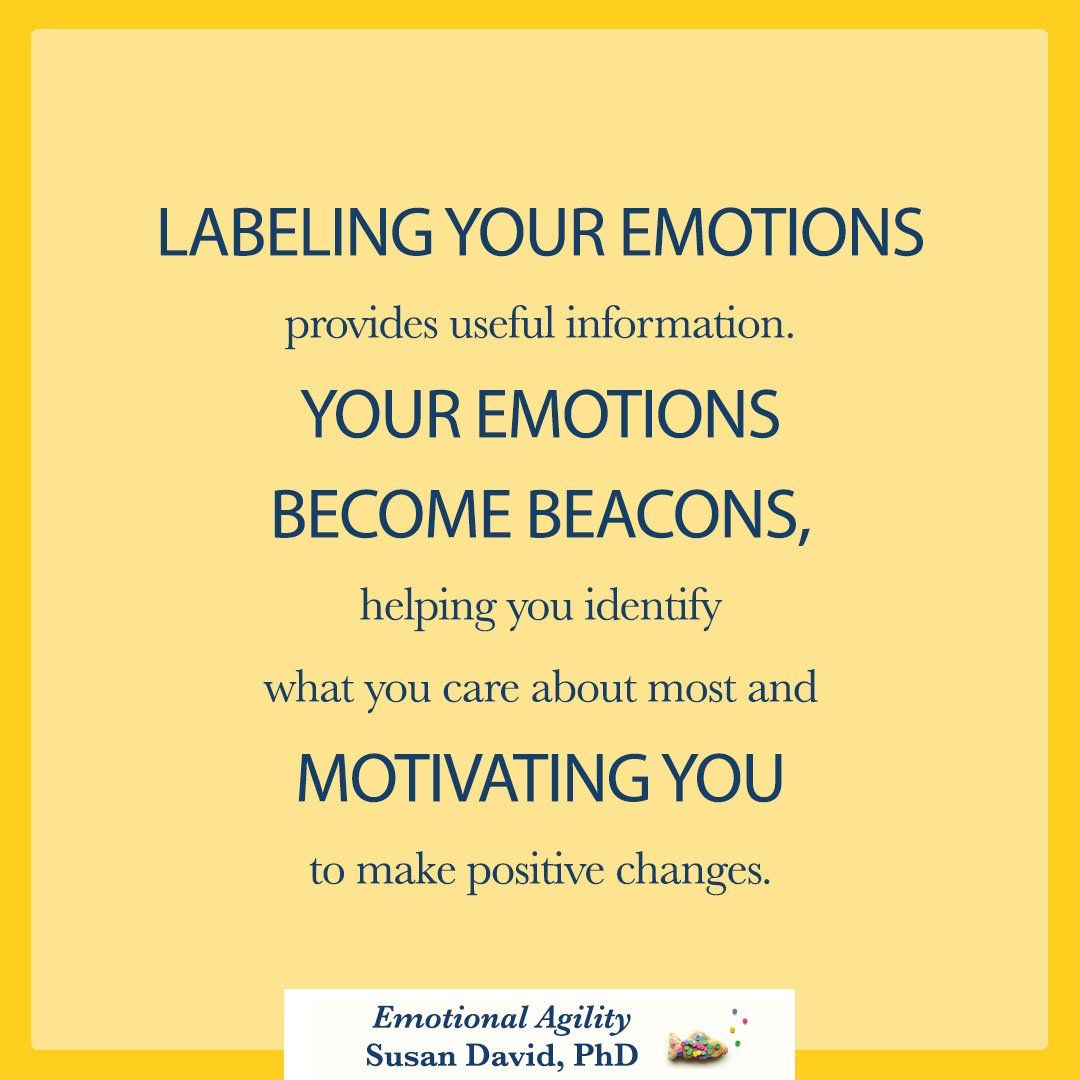
If we can give ourselves permission to slow down and really think about what our emotions are telling us and to stop identifying with a feeling, we can use that information to make changes in our lives that could well mean the difference between living in depression and despair and living in hope and happiness. Happiness to some extent is a choice and we can choose happiness by retraining our brains to speak kindly to ourselves. Constantly engaging in negative self-talk and self-shaming is not the way to achieve happiness. Speaking kindly to ourselves and offering ourselves positive self-affirmations is a way to move toward happiness. Being gentle with and compassionate toward ourselves can move us closer to happiness.
Our brains are about 70 percent more likely to engage in negative thinking than positive thinking so retraining our brains takes practice. Moving from negative self-talk to positive self-talk takes persistence. Moving from depression and despair to hope and happiness requires daily effort and daily commitment. This may seem daunting at first, but the end result will be feeling better about yourself.
If this seems challenging, I encourage you to use a wet/dry marker to write on your bathroom or bedroom mirror a positive statement about yourself, such as “You are beautiful,” and practice saying that aloud to yourself every morning when you are dressing and at bedtime when you are winding up your day. Try doing this for a few weeks and try to notice if you start feeling better about yourself. Then, stick with it. Try a new positive self-affirmation. Be your own cheerleader.
What positive self-affirmation can you offer yourself to start? What nice thing can you say to yourself to start moving from depression and despair to hope and happiness? Notice what you might be feeling and use that data to propel you forward.
Karri Christiansen, MSW, LSW, CADC, CCTP
 phoenixrisenblog