
Human beings are complex creatures. We are comprised of bone and muscle and skin and hair. We are humans because, in part, we are capable of higher thinking and recognizing our emotions and feelings. But we are so much more than our thoughts and feelings.
If you think about it, our thoughts and feelings are like visitors; they come and go and rarely stay forever. Sadly, many of us struggle with the notion of letting go of certain thoughts and feelings, be they recurrent or perplexing. It can feel challenging to recognize a thought as, well, just that. A thought is just a thought. Just as a feeling is just a feeling. Some folks, though, tend to lean into their thoughts and feelings, leaving them open to the possibility of over-identifying with those thoughts and feelings.
It is so important to choose our words carefully when describing not just what we are thinking, but what we are feeling. If we use words that open us up to over-identifying with a thought or feeling, that can lead us into anxiety or depression. It may sound like a matter of semantics, but words really do matter.
Susan David, PhD., author of “Emotional Agility: Get Unstuck, Embrace Change and Thrive in Work and Life,” encourages us to consider creating space between our thoughts and feelings by using words to do so. For example, instead of thinking or saying, “I’m so stressed.” We instead can think or say, “I notice that I am feeling stressed.” The latter statement reminds us that “stressed” is just a feeling that likely will pass at some point.
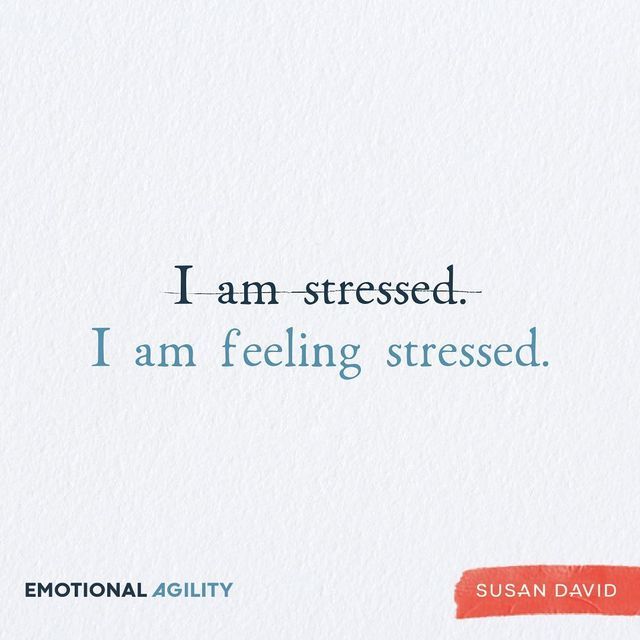
We can give ourselves the power to step back from our feelings, whatever they may be, but particularly with those that are more challenging, by choosing to reframe the way we think about and verbalize our feelings. We can feel more in control of our thoughts and our thoughts about our feelings when we give ourselves permission to examine them more closely.
David goes even further, reminding us that feelings are neither good nor bad, positive nor negative. Yes, some feelings may seem somehow harder to manage, but again, most feelings are temporary. Rarely are we left with a feeling that lasts our entire lifetime. We can choose to not over-identify with our feelings by using language that creates space between us and our emotions. This may require us to slow down and really think about what it is we are feeling and use accurate words to describe our emotions. Doing so also gives us time to choose how we want to react to those feelings and decide what we want to do about those feelings.
Slowing down and really giving ourselves time to think about what exactly it is that we are feeling can leave us with the sense that we are more in control of not just our emotions, but our reactions to them. This can be handy in times of stress or anger, but doing so also gives us permission to recognize feelings of happiness, joy and awe.
Humans are amazing beings. We have evolved over millenia to be able to entertain complex thoughts and ideas but we also are capable of intense feelings and emotions, some of which may feel difficult to navigate. Allowing ourselves permission to step back from some of those more challenging feelings can help prevent us from over-identifying with those feelings. After all, we are more than our thoughts and feelings.
~ Karri Christiansen, MSW, LSW, CADC, CCTP
 phoenixrisenblog