
Perfectionism and struggling with feeling not good enough

We live in an era of social comparison, in large part due to the prevalence of social media such as Facebook, Instagram and TikTok. All of these platforms encourage many people to post what at first glance appears to be images of all the people living their best lives ever. What these social media platforms often fail to do is show those who engage that most of those people, be they so-called “influencers,” or regular everyday folks, also struggle on a frequent basis.

Social media encourages social comparison and often leaves those who engage with feelings of low self-worth, low self-esteem and a persistent feeling of not being good enough. This is also true of people who do not engage in social media but who may have been influenced by comments made by parents, teachers, peers, colleagues or even friends. Such comments may have been offered as a way to motivate but really serve to feed perfectionism.

What is perfectionism and how can we move away from it? Perfectionism is a trait many people possess and can encourage people to try to meet unreasonable or even impossible standards. Many people who struggle with perfectionism find themselves ruminating over details, with intrusive thoughts and negative self-talk. Many people who struggle with perfectionism often find themselves with a pervasive sense of not being good enough, pretty enough, fit enough, smart enough, talented enough … enough of anything.

What perfectionism does is rob us of our humanity. Perfectionism tells us we are not worthy of love or belonging because we haven’t done something perfectly. What we often fail to remember is that we all are perfectly imperfect beings. None of us is perfect and trying to be perfect can lead to depression and anxiety. Perfectionism is exhausting.
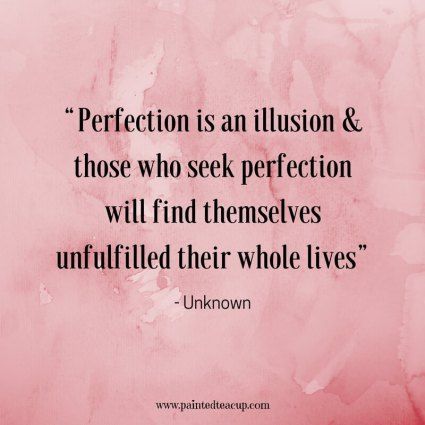
What happens when we strive for perfection is that we often notice a pervasive feeling of disappointment, in ourselves, in our accomplishments, in who we are as human beings. Perfectionism tells us that our best is never good enough, therefore we are not good enough. Perfectionism tells us that we are somehow less than if we fail to meet some unattainable standard set either by ourselves or by someone else. And when we constantly feel as though we are somehow less than, we fail to recognize that our best is all anyone, including ourselves, can ask of us.

The antidote to perfectionism is self-compassion. And while self-compassion seems to some to be some kind of radical notion, it allows us to throw off the shackles of perfectionism. When we give ourselves credit, grace and compassion for doing the best we can with what we have in the moment, we can start to tackle the monster that is perfectionism. When we offer ourselves compassion, we give ourselves permission to recognize that nothing on this planet is perfect, that all beings are perfectly imperfect and also worthy of love and belonging.

Offering ourselves compassion does not mean we do not hold ourselves accountable. It means that we do the best with what we have. It means that we give ourselves permission to accept that our best is good enough and that trying to give more than 100 percent is not actually possible. We can strive for excellence by doing our best. When we strive for perfection, we almost always will feel disappointed because nothing is perfect.

The next time you find yourself in battle with the monster that is perfectionism, try offering yourself compassion for doing the best you can with what you have right now. Remember that it is okay to hold yourself accountable for meeting reasonable standards but that perfectionism means that that standard is nearly always just out of reach. Striving for perfection likely will leave you feeling exhausted and as though you are not good enough. You are good enough. You are more than enough.

~ Karri Christiansen, MSW, LSW, CADC, CCTP
Perfectionism and struggling with feeling not good enough

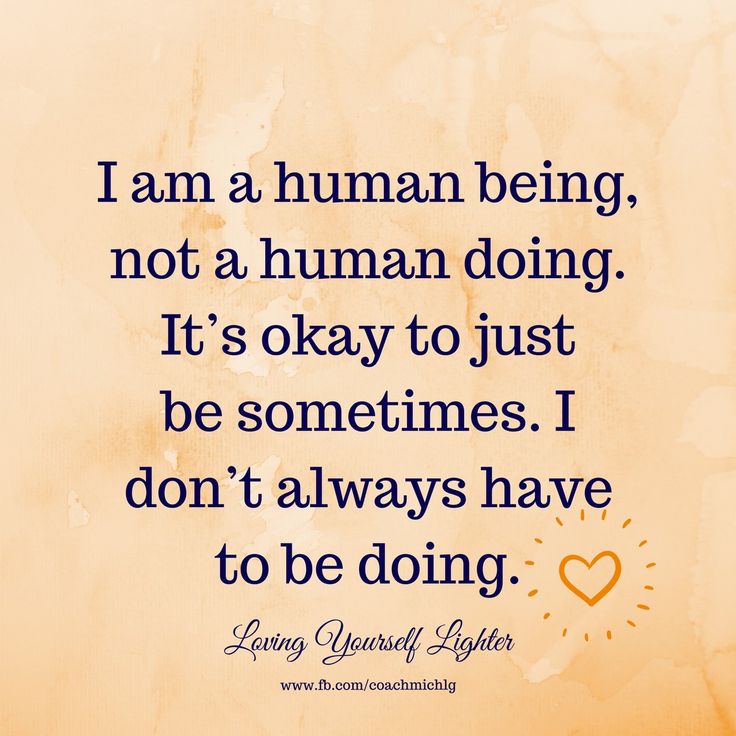
We are not human “doings”

Today marks National Relaxation Day in the United States, leaving me pondering the idea of rest and relaxation and why that is challenging for so many people. It seems as though many people view their self-worth and their worth in the eyes of others more on what they do than on who they are as people. This reminds me that we are not human “doings.” We are human beings.

We live in a society that places much value on peoples’ productivity. Many of us work at least one job, to pay the bills, rents or mortgages, to have money for goods and services. Yet so many of us find ourselves also engaging in activities that leave us feeling “productive,” such as completing household chores, attending to what one client refers to as “life administration tasks,” and doing all sorts of other things that leave us feeling emotionally, mentally and physically spent. We often humble-brag about all we accomplish during the day, while also voicing feelings of exhaustion, stress, anxiety and overwhelm, wearing those feelings as some sort of badge of honor. We eschew rest and relaxation, or self-care, as selfish or self-indulgent. So, we often forego those activities that actually bring us joy. We forego rest. We forego simply being.

I understand that there are some things that have to get done. Many of us have to go to work. The laundry, the dishes, the vacuuming need to get done. We have to make sure the electric, water and gas bills get paid in a timely fashion. We have to attend doctor and dentist appointments. But what happens to our brains and our bodies when we fail to give ourselves permission to rest, to just be? Indeed, our bodies will tell us when we need to rest. We will get sick with a cold, the flu, COVID. We will find our moods and spirits falling. We will find ourselves easily distracted. We will find ourselves sleeping perhaps more than usual or very poorly. These things likely more than not will happen at the most inopportune times.

This is just part of why rest and relaxation is so important. We are human beings, not human “doings.” We as humans are not meant to go 24/7/365 with no rest. We are not machines. We have to give ourselves permission to rest. And, sleep is just one of the ways we need to rest. We also need to give ourselves permission to take a break to just sit and stare and do nothing.

Furthermore, our value as human beings is not dependent upon our accomplishments, what we do or how much we get done. Our worthiness is not dependent upon how many of our To-Do List items we cross off on a daily basis. As Brene Brown has said, we do not have to hustle for our worthiness. We are worthy of love, of belonging, of respect, simply because we are human. No amount of “doing” will make us worthy in the eyes of those who cannot see and appreciate who we are as human beings.

There is so much more to us as people than what we do. Our self-worth cannot be reliant upon doing, doing, doing. Our self-worth cannot be reliant solely upon feelings of productivity because there is more to us as people than what we do. What matters most is who we are as humans. Are we kind, caring, compassionate, loyal family and friends? Are we considerate, thoughtful? Are we loving toward ourselves and others?

The more we come to realize that we are human beings, the easier it may become to give ourselves permission to rest, to just be. One of the ways we can do that is by giving ourselves permission to engage in healthy self-care, such as meditation. Meditation can be a radical act of self-compassion and a beautiful way to rest and just be.

How can you place value on your human being-ness today? What can rest and relaxation look, sound and feel like for you today? Can you give yourself permission to just be?

~ Karri Christiansen, MSW, LSW, CADC, CCTP

We are not human “doings”