
We live in an era of social comparison, in large part due to the prevalence of social media such as Facebook, Instagram and TikTok. All of these platforms encourage many people to post what at first glance appears to be images of all the people living their best lives ever. What these social media platforms often fail to do is show those who engage that most of those people, be they so-called “influencers,” or regular everyday folks, also struggle on a frequent basis.
Social media encourages social comparison and often leaves those who engage with feelings of low self-worth, low self-esteem and a persistent feeling of not being good enough. This is also true of people who do not engage in social media but who may have been influenced by comments made by parents, teachers, peers, colleagues or even friends. Such comments may have been offered as a way to motivate but really serve to feed perfectionism.
What is perfectionism and how can we move away from it? Perfectionism is a trait many people possess and can encourage people to try to meet unreasonable or even impossible standards. Many people who struggle with perfectionism find themselves ruminating over details, with intrusive thoughts and negative self-talk. Many people who struggle with perfectionism often find themselves with a pervasive sense of not being good enough, pretty enough, fit enough, smart enough, talented enough … enough of anything.
What perfectionism does is rob us of our humanity. Perfectionism tells us we are not worthy of love or belonging because we haven’t done something perfectly. What we often fail to remember is that we all are perfectly imperfect beings. None of us is perfect and trying to be perfect can lead to depression and anxiety. Perfectionism is exhausting.
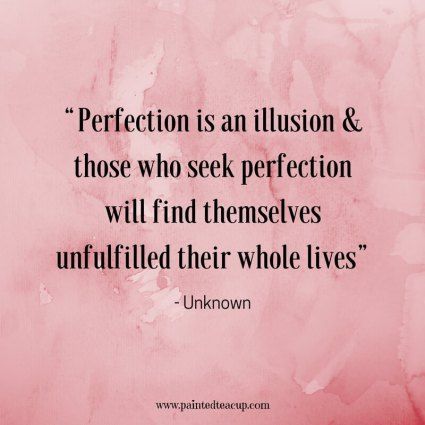
What happens when we strive for perfection is that we often notice a pervasive feeling of disappointment, in ourselves, in our accomplishments, in who we are as human beings. Perfectionism tells us that our best is never good enough, therefore we are not good enough. Perfectionism tells us that we are somehow less than if we fail to meet some unattainable standard set either by ourselves or by someone else. And when we constantly feel as though we are somehow less than, we fail to recognize that our best is all anyone, including ourselves, can ask of us.
The antidote to perfectionism is self-compassion. And while self-compassion seems to some to be some kind of radical notion, it allows us to throw off the shackles of perfectionism. When we give ourselves credit, grace and compassion for doing the best we can with what we have in the moment, we can start to tackle the monster that is perfectionism. When we offer ourselves compassion, we give ourselves permission to recognize that nothing on this planet is perfect, that all beings are perfectly imperfect and also worthy of love and belonging.
Offering ourselves compassion does not mean we do not hold ourselves accountable. It means that we do the best with what we have. It means that we give ourselves permission to accept that our best is good enough and that trying to give more than 100 percent is not actually possible. We can strive for excellence by doing our best. When we strive for perfection, we almost always will feel disappointed because nothing is perfect.
The next time you find yourself in battle with the monster that is perfectionism, try offering yourself compassion for doing the best you can with what you have right now. Remember that it is okay to hold yourself accountable for meeting reasonable standards but that perfectionism means that that standard is nearly always just out of reach. Striving for perfection likely will leave you feeling exhausted and as though you are not good enough. You are good enough. You are more than enough.
~ Karri Christiansen, MSW, LSW, CADC, CCTP
 phoenixrisenblog