
It is more common that one might think: mistaking love for being addicted to a certain person. People may mistake that headiness for love when, in fact, what they are experiencing is being addicted to the ups and downs of a tumultuous relationship. People sometimes become addicted to being on an emotional roller coaster caused by an unstable relationship.
The Big Book of Alcoholics Anonymous describes alcohol as “cunning, baffling and powerful.” The same could be said for certain relationships or people. Certain people leave us believing what we are experiencing is love, when, in fact, it is addiction. We come to believe we cannot live without a certain person. We try to convince ourselves that the red flags we see in the periphery are not that bad, that we can tolerate the uncertain nature of the relationship and the unpredictable, unreliable behaviors of a certain person. We come to believe that the relationship is somehow special .. that the bond that exists is somehow special … that we are special because this other person chooses to spend time with us. We come to be addicted to the person, mistaking love for addiction.
This is more common than one might think. I have met and worked with several individuals who have found themselves in relationships they have trouble ending, despite all the warnings and red flags. These relationships can last months, years, even decades before they are ended. Ending them can be challenging, because people tend to convince themselves that the relationship will improve with time. People who find themselves in these sorts of addictive relationships tend to think that if only they could be a better partner, do more, or work harder their partner will be the person they need them to be. That rarely works, leaving one partner feeling resentful and exhausted.
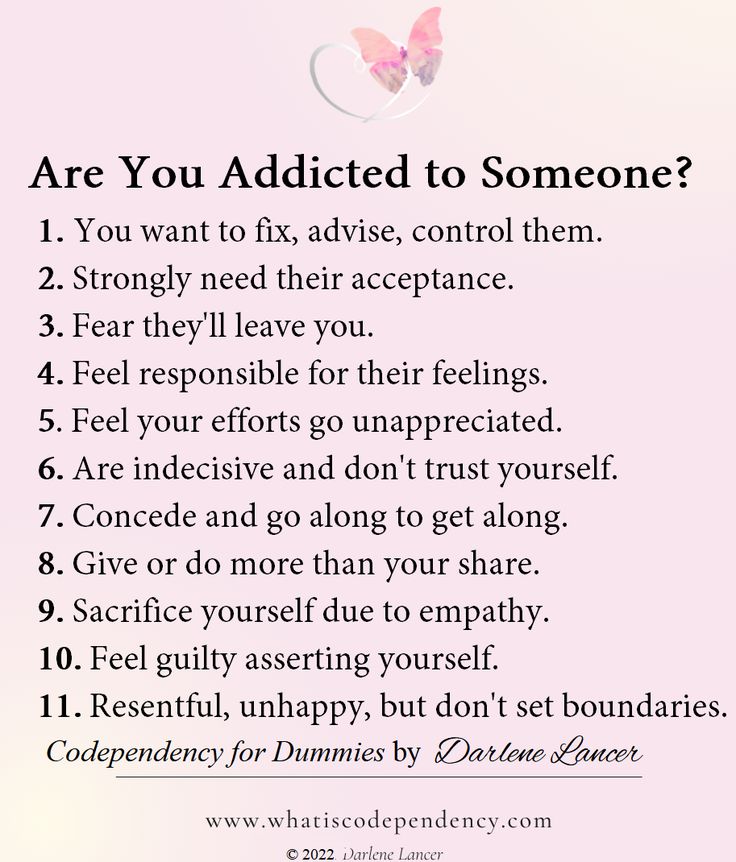
People who find themselves in addictive relationships often find it difficult to assert themselves, plainly stating their needs, wants, hopes and desires. People who find themselves in addictive relationships often have difficulty setting and enforcing boundaries. It is important to remember that your needs, wants, hopes and desires are just as important as your partner’s. It is okay to share what your needs are in clear, plain and kind language. It is okay to set boundaries with your partner, so that person knows what you will and will not tolerate in a relationship.
If you do not share your needs, wants, hopes and desires, if you do not set and enforce clear boundaries, the likelihood that you will experience feelings of resentment is high. Resentment builds when we feel that our needs are not being met, that we are not being heard or when we feel disrespected. It is crucial to the health of the relationship that both partners feel seen, heard and respected.
A healthy relationship does not leave one partner feeling as though they are doing all the work. A healthy relationship does not leave one partner feeling unseen, unheard or disrespected. A healthy relationship does not feel lopsided. No one partner should feel as though the onus is on them to maintain the health of the relationship. Both partners should be working equally hard to maintain the health and stability of the relationship. If that is not happening in your relationship, it may be time to re-evaluate the relationship and its future.
If you find yourself in a relationship that has left you feeling exhausted and as though you are on an emotional roller coaster, it may be addiction rather than pure love. If you find yourself walking on eggshells with your partner because you are afraid of how that person will react or respond to you voicing your needs, wants, hopes and desires, it may be time to re-evaluate that relationship. Indeed, it may be time to end that relationship.
If you have found yourself in something that feels more like addiction than pure love, it is okay to end the relationship. That may mean deleting and blocking that person from your social media accounts, phone and contacts. That may mean completely cutting ties with that person. Yes, that likely will be difficult, but in the long run, you likely will notice improvements in your mental and emotional health, and self-esteem.
Know that you deserve better in a relationship than to feel as though you are solely responsible for its health and future. Are you ready to clearly state your needs, wants, hopes and desires? Are you able to set and enforce boundaries with your partner? Can you give yourself permission to step away from something that feels more like addiction than pure love?
~ Karri Christiansen, MSW, LCSW, CADC, CCTP
 phoenixrisenblog