
For many people, it’s been a long year—and we still have a few weeks to go. For others, it’s been a rough start to the decade, having endured a global pandemic, what for many has been a challenging economy and now, a fraught election. We may be feeling stressed or anxious, or some combination thereof. Others, though, may be feeling something deeper, an exhaustion that just won’t go away. Many people are experiencing burnout.
What is burnout? And, how do we deal with it when we can’t just walk away from our jobs, our families or whatever else is causing extreme stress? Burnout happens when it seems that we cannot avoid stress and are feeling particularly anxious most, if not all, of the time. Burnout can be the result of giving too much of ourselves, such to the point that we feel we have little, if anything, left to give, be it to our jobs, our partners, our families, or whomever.
Burnout can feel like we have no control over some or all aspects of our lives. It can feel as though we have no say in how or when we do our work, be it with our schedule or our assignments or our workload. It can feel as though there is a lack of clarity over what your role is at work or at home. It can feel as though there is a lack of clarity about what is expected of you in any of your roles.
Burnout can manifest as irritability, leading to more frequent conflict with others. It can feel as though we either have too much or too little to do. It can lead to feelings of boredom. Burnout can also feel as though we haven’t the support we need to perform well in any of our roles, be it at work or at home. Burnout can lead to a lack of a work-life balance.
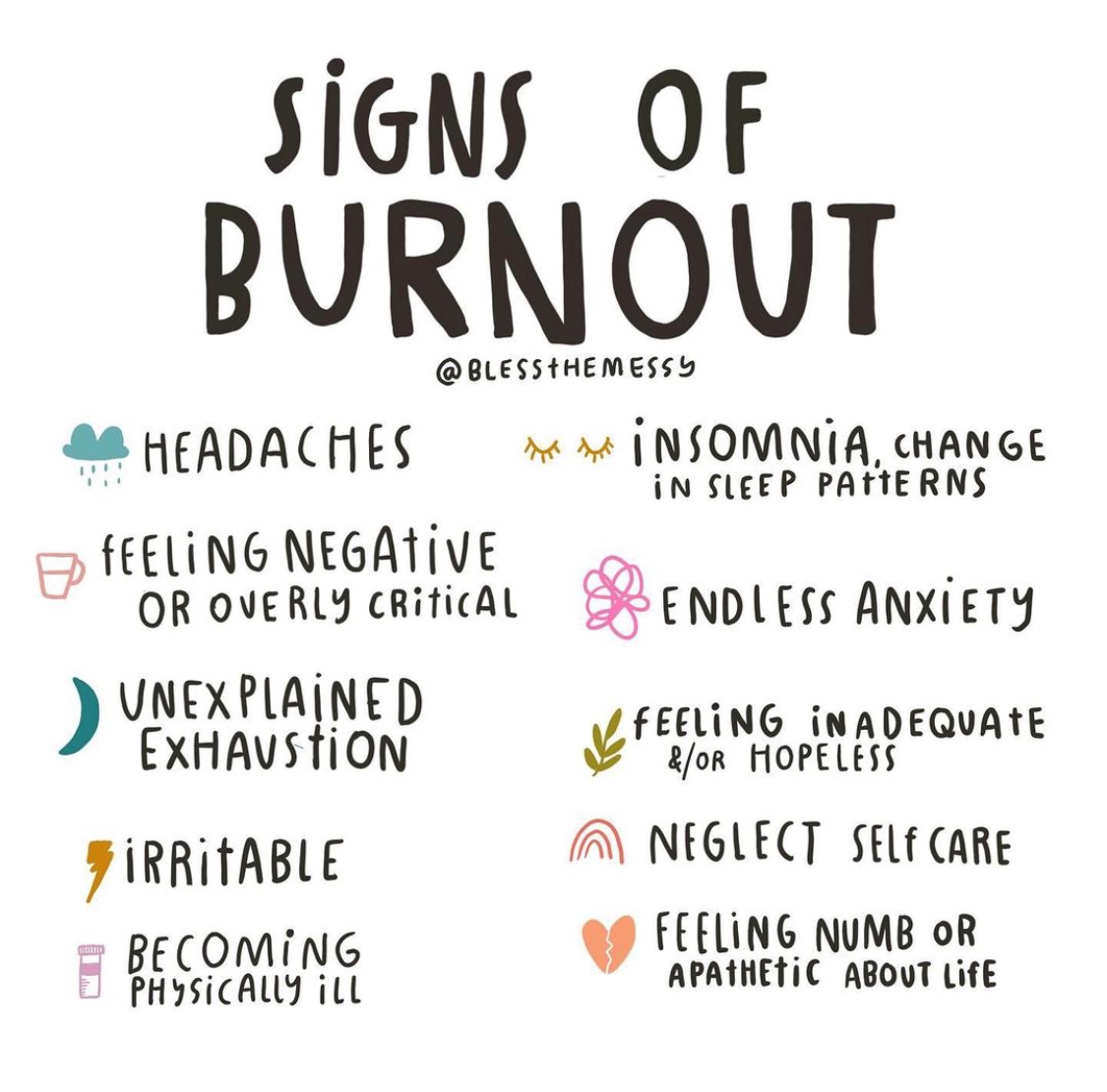
Many who experience burnout report frequent headaches, poor sleep and an inability to care for themselves. Others report that they have lost interest in activities they once enjoyed. Many of the symptoms of burnout are similar to those of depression and anxiety, and if left untreated, can actually lead to depression and anxiety.
It is important to take care of yourself in healthy ways if you notice yourself feeling burned out. It is important to practice good sleep hygiene, meaning going to bed and waking at about the same times every night and day. Most people do well with seven to nine hours of sleep.
It also is important to find healthy ways to manage stress. In addition to getting adequate sleep, it might be helpful to incorporate some exercise into your day. Studies show that at least 30 minutes of daily activity is helpful in warding off stress. Finding time for fun activities also can help with burnout.
Many people also find it helpful to set clear boundaries on their time, energy and space. That may mean having conversations with supervisors about workloads or with family members about care taking responsibilities.
One thing that is helpful to ward off burnout and to find some measure of joy in your life is practicing gratitude, which we have talked about before here. That does not have to mean that you’ve found a zillion dollars in a pot at the end of a double rainbow. It may mean that you enjoyed a really good morning beverage with someone you love. Staying connected with loved ones, be they family or friends, also can be helpful in managing burnout.
Lastly, while it may seem a good idea to comfort yourself with a piece of apple pie or chocolate cake or a venti double-caff, double-whip, double-caramel macchiato, or a three-blue-cheese-stuffed olive martini, that likely won’t help in the long run. What might help is nourishing yourself with healthy foods and staying hydrated with good, old-fashioned water.
Many people are experiencing burnout, especially now that we are in the winter holiday season. It is important to recognize the signs of burnout and to take care of yourself in healthy ways. Yes, self-care may help, but that is only part of the solution. Reach out to a trusted other, supervisor or mental health professional if you feel your symptoms are worsening or becoming unmanageable.
~ Karri Christiansen, MSW, LSW, CADC, CCTP
 phoenixrisenblog