
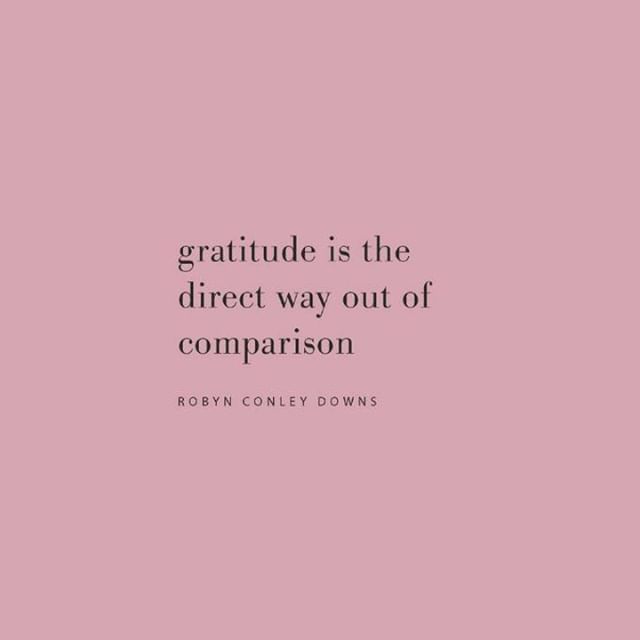
Gratitude is the antidote to comparison

And so, we find ourselves well into the holiday season. For many people, this is a season of giving, of gratefulness and of kindness. For many others, though, this season can spur thoughts of comparison, leaving us feeling either inferior or superior to others.

The holiday season can remind many of us of all we have and all we have to be thankful for. Some people, though, find themselves falling into that comparison trap of feeling as though we’re not doing enough, we’re not having as much fun celebrating the holidays as others may be, that our houses are not decorated as spectacularly as other people’s houses, that our holiday fashions pale in comparison to others. Some people may feel as though they have to go overboard with giving, doing and being everything to everyone in order to feel as though they measure up during the holiday season.

What may help us stay out of that comparison trap is practicing gratitude. When we practice gratitude, we give ourselves permission to be thankful for all we have, all we do, for the people in our lives, and the time we have with them. The holiday season can leave us feeling as though we’re not doing enough, that we don’t have enough, that we aren’t enough … but only if we let ourselves feel that way. The antidote to comparison is gratitude.
Yes, it can be difficult to let go of comparison when it seems from magazines, reels, and social media that we might not be “measuring up” to other people. But when we engage in comparison, we are forgetting to practice gratitude for our lives. Practicing gratitude can remind us that many of us have just what we need right now. Yes, some people have more, and some people have less. That does not make us somehow lesser than or better than. Let go of the need for comparison.

What happens when we find ourselves falling into that comparison trap? We may notice that we start to feel either inferior or superior to others. Remind yourself that it is okay to be grateful for what you have while working toward what you want. If you find yourself falling into that comparison trap, try to use comparison as a tool to make your life better, to do better for yourself and for others, to inspire yourself.

Most of us will fall into that comparison trap from time to time; that is normal and human. When you notice yourself feeling somehow lesser than or better than others, try to remind yourself that none of us is lesser than or better than another person. We’re all just different. And that is the beauty of humanity. None of us is exactly the same as another. My life is different than your life. My situation is different than your situation. And, that is okay. Not better than. Not lesser than. Just different. Practice gratitude for all you are and all you have at the moment. Practice gratitude and let go of the need to compare yourself to anyone else, anyone else’s life, and anyone else’s situation.

What can you practice gratitude for during this holiday season, and all the other seasons of your life? Can you let go of the need to compare yourself, your life, your situation to anyone else’s? Can you remind yourself that none of us is better than or lesser than another human? We’re all just different. And that is the beauty of humanity.

~ Karri Christiansen, MSW, LSW, CADC, CCTP
Gratitude is the antidote to comparison

Pity is not the same as compassion

So, like many other people, I am reading “The Let Them Theory” by Mel Robbins, and I find the book intriguing. Much of what I am reading really resonates with me, as likely is true for many other readers. But, while a lot of what I am reading seems on target, some of what I have read so far has rubbed me that wrong way as a human and as a social worker.

In the book, Robbins intimates that most people have the emotional maturity of an eight-year-old. I respectfully disagree. I think many people have better emotional maturity than that. Perhaps what some people are lacking is the emotional vocabulary to accurately describe what they are feeling. Emotions are nuanced, and having the vocabulary to accurately describe what we are feeling is important. That does not mean that if we do not have an expansive emotional vocabulary, we have the emotional maturity of an eight-year-old.

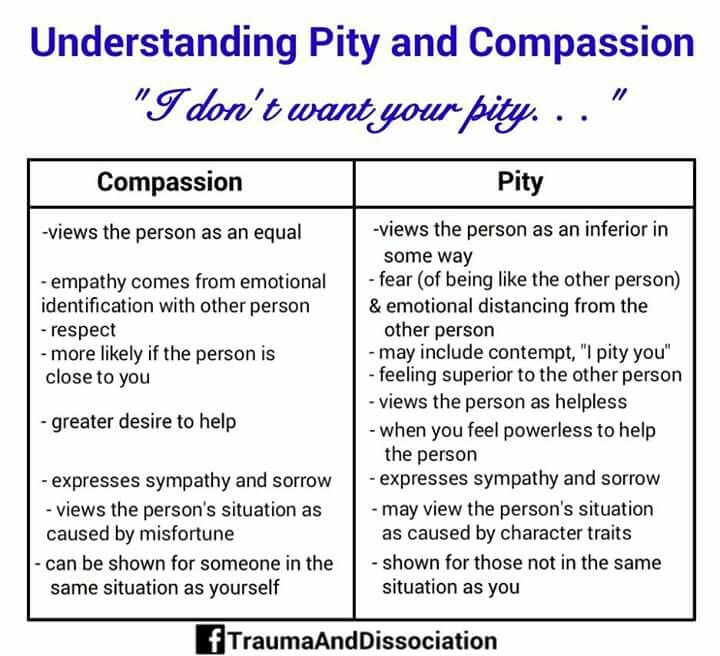
Robbins then goes on to say that we should offer those whose emotional maturity may be less than our own some pity. And compassion. Well, pity is not the same as compassion. In fact, pity and compassion are enemies. Pity implies a tone of superiority toward others while compassion views others as equals.

Perhaps what Robbins is trying to say is that when we choose to react to others whose emotional maturity is less than our own, what we should do is try to offer understanding for where they are coming from. Understanding goes a long way in an attempt to offer compassion. But again, pity is not the same as compassion. Offering someone pity can mean that we keep emotional distance from another person, while offering someone compassion offers us a chance to lean and really try to understand where another person is coming from.

Pity is more akin to feeling sorry for someone and not really trying to understand their plight. Compassion is trying to understand someone’s experience and honoring that experience. If we are trying to gain a better understanding of another person’s emotions or experience, offering that person compassion goes a lot farther than offering someone pity.

As I move through the book, I am reminded that using the “Let Them” theory is just a tool. Anyone who wants to be a better human, who wants to learn that they can choose how to react to what another person says or does may do well to remember that while we cannot control what others think, say or do, we can choose how we want to respond to others. Reminding ourselves that we all experience emotions differently, and express those emotions differently also may be helpful. And, reminding ourselves that some people may have developed a more expansive vocabulary to describe their emotions than have other people, that does not mean that their emotional maturity is less than or better than ours. It’s just different.

Compassion for others requires that we lean in and try to understand where another person is coming from. Compassion asks us to be curious about another person’s experience. It does not mean that we feel sorry for another person or compare that person’s experience to our own. Compassion means that we believe another person’s telling of their experience and respect their experience as their own. Compassion does not engage in comparison with another person’s experience. Compassion requires us to honor another person’s experience.

~ Karri Christiansen, MSW, LSW, CADC, CCTP
Pity is not the same as compassion

Stop wishing things were different

We seem to be living in a world where, for many people, things seem a bit upside down. Many people are struggling with today’s social and political climates, with global warming, the economy, and with everyday stresses and anxieties stemming from our jobs, families and perhaps even friends. Many people seem to be wishing things were different.

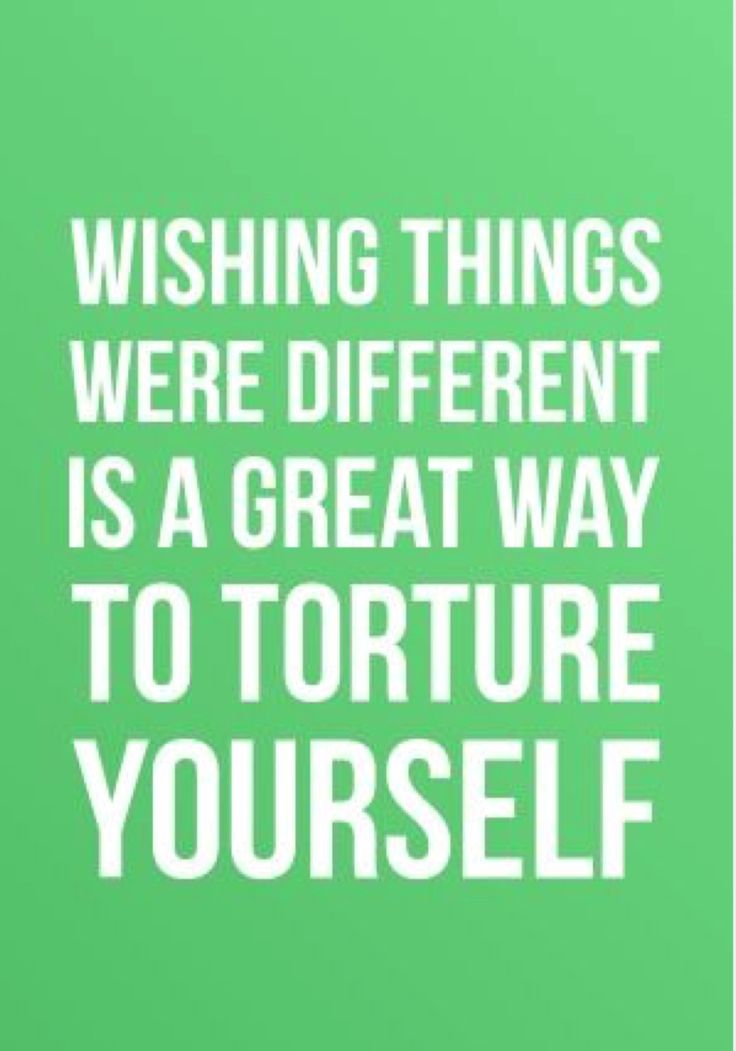
I get it. But what happens to our minds, our bodies and our mental health when we keep wishing things were different? What likely is happening is that our stress and anxieties are increasing, leaving us feeling both emotionally and physically exhausted. Wishing things were different not only robs us of the opportunity to accept things as they are, but also speaks to our desire for and total lack of control over external forces. When we are wishing things were different, what we really are saying is that we wish we had control over what other people think, say or do. We are saying we wish we had control over things that are, in actuality, well beyond our control.

Anxiety is borne, in part, when we stress over things we really cannot control. Wishing things were different heightens our anxiety because we are faced with the reality that we cannot control what other people think, say or do. Furthermore, wishing things were different can keep us stuck in the past, leaving us ruminating over things we or other people have said, done or thought. Just as we have no control over what other people think, say or do, we similarly have no control—no power—to go back and change what we or others may have said or done in the past. Stop wishing things were different.

When we stop wishing things were different, we empower ourselves to really consider what we can control. We also give ourselves permission to stop fighting and accept that things just are the way they are. That is not to say that we must resign ourselves to accept situations or relationships that are emotionally or physically unsafe. Nor does accepting the way things are mean that we cannot work toward making the future better for ourselves and others. When we stop wishing things were different, we take back our power and remind ourselves of what we really can control, namely what we think, say or do.

When you get right down to it, we really have control over just one thing, and that is ourselves. We can choose how we want to respond to external stimuli. We can choose how we want to respond to what others say. We can choose how we want to respond to what others do. We can choose to remind ourselves that we really have no control over what others think. When we stop wishing things were different, we empower ourselves to make better choices about how we want to respond to external stimuli.

Is it time for you to stop wishing things were different? Is it time for you to stop and think about what you really can and cannot control? Is it time for you to step back into your power and choose how you want to respond to other people, to external stimuli? Stop wishing things were different and take back your power.

~ Karri Christiansen, MSW, LSW, CADC, CCTP

Stop wishing things were different