
Science tells us that we have upwards of 80,000 thoughts a day. That’s a lot of thoughts, and the truth is, we are not even aware of many of them. Some of our thoughts are helpful, but others are may not be. In fact, some of our thoughts might not even be true. That thought alone can be hard to wrap our heads around.
Sigmund Freud, the father of psychoanalysis, spoke of three levels of thought: unconscious, pre-conscious, and conscious thought. Thoughts that are in our unconscious are those thoughts of which we are not at all aware. Those thoughts that are in our pre-conscious are those that we can easily bring into the conscious realm. Thoughts that are in our conscious realm are those of which we are fully aware. It’s those thoughts that are in the conscious realm that can really trip us up.
Many of our thoughts are helpful. They provide direction and support throughout our days. These thoughts can help guide throughout our lives. But some of our thoughts, particularly those of which we might not be fully aware, can be less helpful and lead us down a path of storytelling. This storytelling path is often what leads us to struggle with those sometimes challenging emotions of fear, anger, frustration and contempt. What happens, though, if we give ourselves permission to simply observe our thoughts so that we can slow down and decide what, if anything, we want to do with those thoughts?
What happens when we become observers of our own thoughts? This is known as metacognition, and can be quite helpful, especially when we start telling ourselves stories about what is happening in our lives, what others are doing or how others are behaving. When we become objective observers of our own thoughts, we can gain control over how we want to respond to those thoughts. Meaning, we loosen the grip our thoughts have over us. When we become observers of our thoughts, our thoughts no longer control us or have power over us.
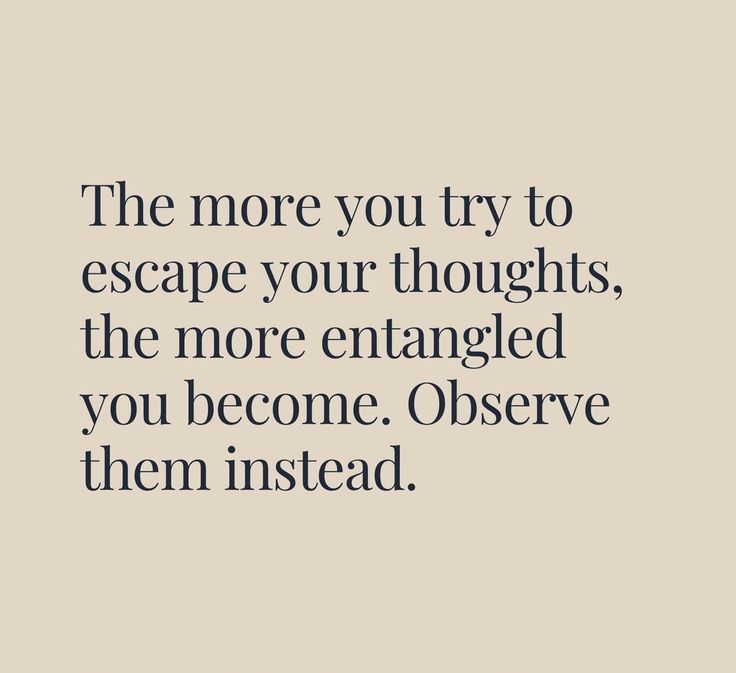
Thoughts are tricky. While some are helpful, others can lead us to feelings or actions that may seem incongruent with our values. Cognitive behavioral therapy posits that our thoughts lead to feelings and then to our behaviors. Some of this seemingly happens automatically, or in our unconscious or pre-conscious realms. This sort of automatic thinking can at times be helpful. but also can be hurtful. When we give ourselves permission to slow down and observe our thoughts, we can choose how to respond to our thoughts.
How do we observe our thoughts, though? An important step in slowing down and observing our thoughts is to simply pause and take a deep breath and really give some thought to our thoughts. Do this without assigning judgement or value to the thought at first. Then, test the veracity of the thoughts. Are our thoughts true? What evidence do we have to support the thought? Is there evidence to the contrary? If the thought is true, what do we want to do with or about the thought? Does the thought influence the way we feel? Does the thought require some sort of action or behavior?
Try observing thoughts like clouds in the sky. Clouds change shape and float by us in milliseconds. Thoughts behave similarly. When we give ourselves permission to simply observe our thoughts without judgement, we can more easily let them go. It’s when we hold onto a thought and really dig in and start to tell ourselves stories about the thought that we can get into trouble. But thoughts are just thoughts. We have the ability to look at them objectively, without judgement or assigning them weight or value. Then, we can decide what, if anything, to do with the thought. That is where our power lies.
Can you give yourself permission to slow down and become an objective observer of your thoughts? How would doing so help you gain some feeling of control over your feelings and behaviors? Can you remind yourself that thoughts are just thoughts, some of which are true and some of which may not be? Can you test the veracity of your thoughts and then determine what, if anything, to do about the thoughts? Doing so may leave you feeling empowered.
~ Karri Christiansen, MSW, LCSW, CADC, CCTP
 phoenixrisenblog