
Overthinking and the need for control

Most of us will engage in overthinking from time to time. This is, to some extent, normal and human. But when overthinking begins to affect our sleep, mood. outlook and emotions, we may need to find ways to avoid overthinking.

Overthinking is the habit of excessively analyzing, dwelling on or replaying thoughts, conversations, decisions, and/or problems such to the point that these become all-consuming and begin to lead to anxiety, depression, sleep disturbances and decision paralysis. Most of us will engaging in overthinking at some point. Some of us will take this to the extreme.

Overthinking often is an attempt to better understand something that already has happened, or can be an attempt to try to control a future outcome. Overthinking often leaves us thinking about past conversations or events, trying to make sense of them. But sometimes when we engage in overthinking about something that happened in the past, we are making some kind of attempt to rewrite history. Unfortunately, we cannot go back in time and change an interaction or conversation with someone. That time has already passed. We can, though, use that interaction or conversation as a lesson, informing us as to how to go about something differently, or better, in the future.

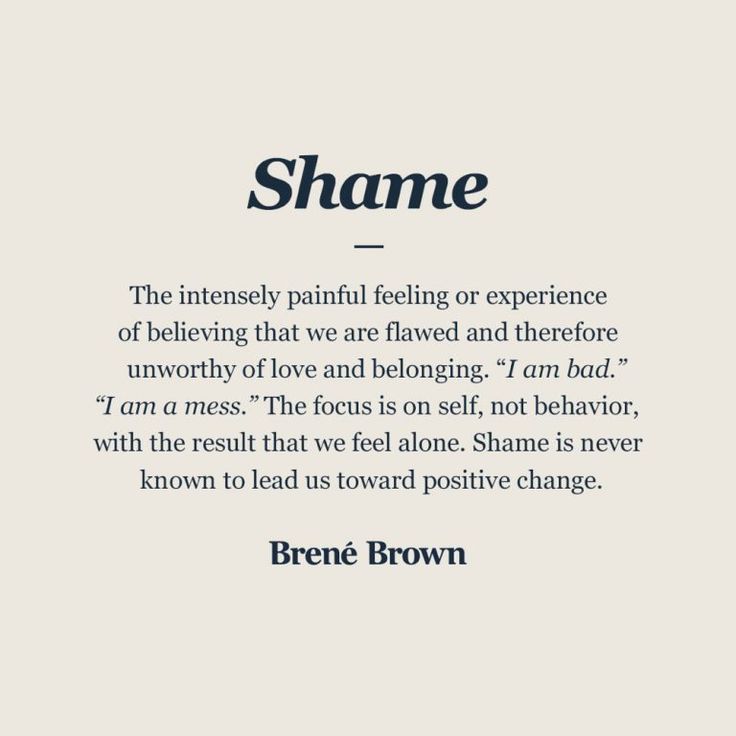
Overthinking something that already has happened also can involve self-shaming thoughts or feelings, particularly if we feel or think that a conversation or interaction did not go as planned, or we perceive that it has gone badly, or when we try to assume how another person felt or what they thought of the interaction, or what they thought about us. Humans can have a tendency to beat themselves up with self-shaming thoughts or use derogatory names to describe themselves or their behavior when a conversation or interaction did not go as we might have liked.

What happens when we repeatedly engage in overthinking is that we can end up in a downward spiral of anxiety and depression, reliving a moment in time that already has passed. This is our brain’s way of trying to make sense of something. This is also our brain’s way of trying to control a narrative that already has happened. Unfortunately, again, we have no control over events, interactions, or conversations that already have happened. But we can learn from them.
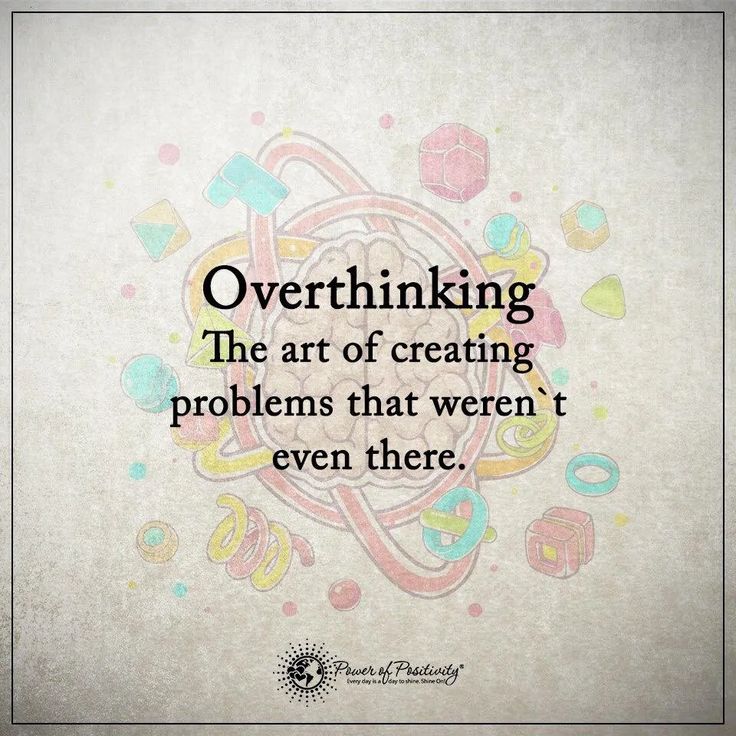
We as humans also tend to overthink about future events, things that are planned or conversations we need to have, as a way to prepare for something that has not even happened yet. This, too, is our brain’s way of trying to control the narrative. The thing is, though, that we have little to no control over what may or may not happen in the future. We have little to no control over how other people may behave in the future, and we have little control over what others may say in the future. Overthinking is our brain’s way of trying to control the narrative.

When we engage in overthinking, we often entertain worst-case scenarios that may or may not happen. Again, this is our brain’s way of trying to control the narrative. This can lead us down the rabbit hole of negative thinking or negative self-talk, heightening our anxiety and depression. This happens when we engage in all-or-nothing thinking, catastrophizing, mind reading, and jumping to conclusions. All of this can affect our sleep, particularly if our overthinking happens at bedtime.

So, how do we stop overthinking? One way is to reflect on what our triggers are for overthinking. For some people, keeping a journal of when we tend to engage in overthinking and what we’re thinking about can be helpful. Once you are aware of what triggers your overthinking, you can adopt coping strategies for situations that provoke overthinking.

Another way to combat overthinking is to really challenge your thinking. What evidence do you have to support your thoughts? What evidence do you have to the contrary? Really try to test the veracity of your thoughts? Are these just stories you have made up in your head, or is there really a good foundation for the thoughts? It is often helpful to be wary of the stories you tell yourself about what has or what may happen.

Sometimes asking to run some thoughts by a trusted other can be helpful, as long as you are open to their ideas. Asking them to be honest with you about your thoughts is important, so that you do not end up in an echo chamber. If you find yourself co-overthinking with that trusted other, that can actually make anxiety worse.

Another way to get away from overthinking is to engage in a healthy distraction, such as reading a book or watching a favorite show or movie. Engaging in an activity such as exercise or something else that will get your mind off things also can be helpful. Be careful to avoid using alcohol or other drugs to turn your brain off, as doing so can lead to other problems that may need a solution later.

If you are feeling anxious due to overthinking, a breathing exercise such as four square or box breathing (breathing in for four seconds, holding breath for four seconds, exhaling for four seconds) can be helpful. Meditation also can be helpful to manage overthinking and the anxiety that often accompanies it, as can practicing mindfulness.

Overthinking happens to most people at some point. It becomes troublesome when you find yourself in an endless loop of thinking that is not helpful. Remembering that we tend to engage in overthinking as some sort of attempt to control the narrative, either past or future, can be helpful. Reminding ourselves of what we do and do not have control over also can be helpful. This means reminding ourselves that what we really have control over is what we think, say and do. We have little to no control over what others think, say or do. Think about what you really can control. And remind yourself that overthinking is a human tendency. Beating yourself up for overthinking generally is not helpful and likely will not stop that behavior. Offer yourself compassion for being human, while challenging and testing the veracity of your own thoughts.

~ Karri Christiansen, MSW, LCSW, CADC, CCTP
Overthinking and the need for control

Breaking the shame and self-sabotage cycle

Most of us have felt it, that tricky feeling that tells us we’re not good enough, we’re not smart enough, we’re not deserving of love, of belonging, of even having our basic needs met, of happiness. It’s shame and it’s one of those feelings that can leave us feeling depleted, defeated, and lead us to engage in all manner of self-sabotaging behaviors.

Shame is an insidious feeling. It eats away at us and leads us in a downward spiral that can feel nearly impossible to break free from. Merriam-Webster defines shame as “a painful emotion caused by consciousness of guilt, shortcoming, or impropriety, or a condition of humiliating disgrace or disrepute.” And while shame is a normal, human feeling, we ourselves often feed it with negative self-talk, perpetuating and intensifying the feeling.

When we feed shame, it tends to grow and can lead us down a path of self-sabotage. We feed the feeling of shame both by engaging in negative. often self-shaming self-talk and then also by behaving in ways that are, at best, not helpful. We feel badly about ourselves, for whatever reason, perhaps we made a mistake, and then add fuel to the fire by engaging in behaviors such as consuming alcohol or other drugs, eating unhealthy foods, spending too much on some retail therapy, engaging in risky sexual behavior. And thus, we perpetuate the shame and self-sabotage cycle. Because when we have engaged in these or other similar behaviors, we start the self-shaming, negative self-talk all over again. We end up in a vicious cycle.

So, how do we break the shame and self-sabotage cycle? First, we have to recognize the pattern that we have found ourselves in. Some people describe it as a negative spiral, a downward spiral, like an airplane falling out of the sky and the pilot needs to pull up the yoke before the plane crashes and burns. It can be challenging to even recognize that we are in a shame and self-sabotage cycle, particularly if we have been living in chaos for a long period of time. We become used to being comfortably uncomfortable. But, the thing is, we don’t have to live this way. We can break free of that cycle when we come to the realization that we deserve better and then demand better, not just of ourselves but of others.

Breaking the shame and self-sabotage cycle depends on offering ourselves kindness, grace and compassion. Shame cannot live in love. Shame will never help us think better, do better or feel better. Particularly if we are struggling with some heavy emotions or have made a mistake or have found ourselves in an untenable situation. We cannot shame ourselves into changing either the way we think or our behaviors.

We can, though, offer ourselves some grace, kindness and compassion by speaking to ourselves as we might a friend or loved one. We can break the shame and self-sabotage cycle by engaging in positive self-talk, by being our own best cheerleader and by giving ourselves grace for being human. We can break the shame and self-sabotage cycle by reminding ourselves that pretty much everyone on the planet makes mistakes, and that’s okay. That is part of being human. We can break the shame and self-sabotage cycle by reminding ourselves that we, as humans, are inherently worthy of love and belonging and happiness. We deserve these things simply because we exist. We do not have to earn love or belonging or happiness.

Breaking the shame and self-sabotage cycle also asks us to make better choices, because we deserve to make better choices that will benefit our minds and our bodies and our souls. If you have turned to alcohol or other drugs, or sex, or food, or shopping, or other risky behaviors in an effort to somehow numb the heavy feeling of shame, you more than likely will not only feel worse in the end, but you may end up with a separate problem that requires attention. Cutting back or cutting out the drinking, drugging, eating unhealthy foods, and overspending is a good way to get out of the shame and self-sabotage cycle. It’s okay to make healthy choices that will leave you feeling better about yourself, your life or your situation.

Many people have or will find themselves in a shame and self-sabotage cycle at some point in their lives. That is part and parcel of being human. But we cannot shame ourselves into thinking better, doing better or feeling better. We cannot numb ourselves out of this feeling by engaging in risky behaviors. We can, though, offer ourselves grace, kindness and compassion for being human, much as we might offer a friend or loved one.

Is it time for you to let go of shame and self-sabotaging behaviors? Is it time for you to let go of the negative self-talk that perpetuates the shame and self-sabotage cycle? Can you practice offering yourself grace, kindness and compassion? Can you speak to yourself with the love you might offer a friend or other loved one? You deserve love and belonging and happiness, just as any other human being does, simply because you exist. Try showing yourself that love; you might just feel better.

~ Karri Christansen, MSW, LCSW, CADC, CCTP

Breaking the shame and self-sabotage cycle

Be an objective observer of your own thoughts

Science tells us that we have upwards of 80,000 thoughts a day. That’s a lot of thoughts, and the truth is, we are not even aware of many of them. Some of our thoughts are helpful, but others are may not be. In fact, some of our thoughts might not even be true. That thought alone can be hard to wrap our heads around.

Sigmund Freud, the father of psychoanalysis, spoke of three levels of thought: unconscious, pre-conscious, and conscious thought. Thoughts that are in our unconscious are those thoughts of which we are not at all aware. Those thoughts that are in our pre-conscious are those that we can easily bring into the conscious realm. Thoughts that are in our conscious realm are those of which we are fully aware. It’s those thoughts that are in the conscious realm that can really trip us up.

Many of our thoughts are helpful. They provide direction and support throughout our days. These thoughts can help guide throughout our lives. But some of our thoughts, particularly those of which we might not be fully aware, can be less helpful and lead us down a path of storytelling. This storytelling path is often what leads us to struggle with those sometimes challenging emotions of fear, anger, frustration and contempt. What happens, though, if we give ourselves permission to simply observe our thoughts so that we can slow down and decide what, if anything, we want to do with those thoughts?

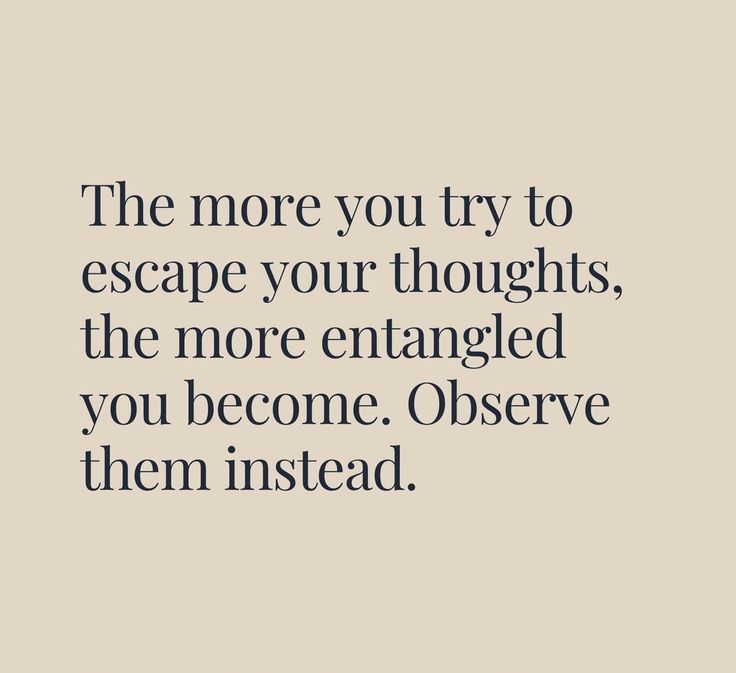
What happens when we become observers of our own thoughts? This is known as metacognition, and can be quite helpful, especially when we start telling ourselves stories about what is happening in our lives, what others are doing or how others are behaving. When we become objective observers of our own thoughts, we can gain control over how we want to respond to those thoughts. Meaning, we loosen the grip our thoughts have over us. When we become observers of our thoughts, our thoughts no longer control us or have power over us.

Thoughts are tricky. While some are helpful, others can lead us to feelings or actions that may seem incongruent with our values. Cognitive behavioral therapy posits that our thoughts lead to feelings and then to our behaviors. Some of this seemingly happens automatically, or in our unconscious or pre-conscious realms. This sort of automatic thinking can at times be helpful. but also can be hurtful. When we give ourselves permission to slow down and observe our thoughts, we can choose how to respond to our thoughts.

How do we observe our thoughts, though? An important step in slowing down and observing our thoughts is to simply pause and take a deep breath and really give some thought to our thoughts. Do this without assigning judgement or value to the thought at first. Then, test the veracity of the thoughts. Are our thoughts true? What evidence do we have to support the thought? Is there evidence to the contrary? If the thought is true, what do we want to do with or about the thought? Does the thought influence the way we feel? Does the thought require some sort of action or behavior?

Try observing thoughts like clouds in the sky. Clouds change shape and float by us in milliseconds. Thoughts behave similarly. When we give ourselves permission to simply observe our thoughts without judgement, we can more easily let them go. It’s when we hold onto a thought and really dig in and start to tell ourselves stories about the thought that we can get into trouble. But thoughts are just thoughts. We have the ability to look at them objectively, without judgement or assigning them weight or value. Then, we can decide what, if anything, to do with the thought. That is where our power lies.

Can you give yourself permission to slow down and become an objective observer of your thoughts? How would doing so help you gain some feeling of control over your feelings and behaviors? Can you remind yourself that thoughts are just thoughts, some of which are true and some of which may not be? Can you test the veracity of your thoughts and then determine what, if anything, to do about the thoughts? Doing so may leave you feeling empowered.

~ Karri Christiansen, MSW, LCSW, CADC, CCTP
Be an objective observer of your own thoughts