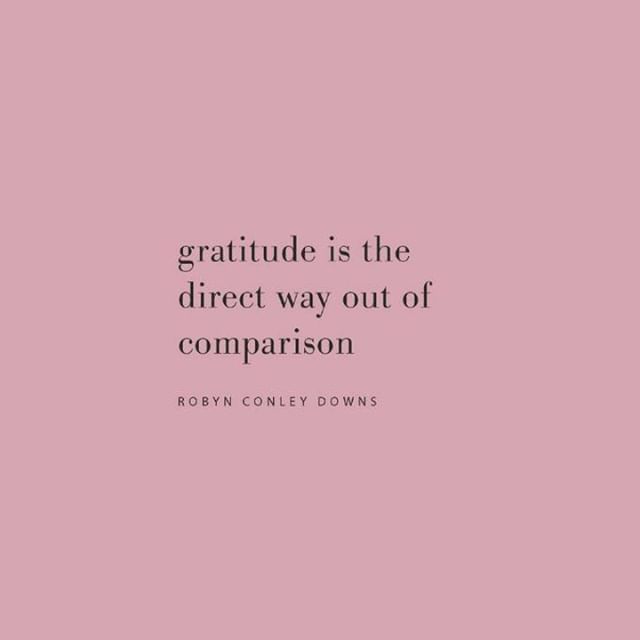
Gratitude is the antidote to comparison

And so, we find ourselves well into the holiday season. For many people, this is a season of giving, of gratefulness and of kindness. For many others, though, this season can spur thoughts of comparison, leaving us feeling either inferior or superior to others.

The holiday season can remind many of us of all we have and all we have to be thankful for. Some people, though, find themselves falling into that comparison trap of feeling as though we’re not doing enough, we’re not having as much fun celebrating the holidays as others may be, that our houses are not decorated as spectacularly as other people’s houses, that our holiday fashions pale in comparison to others. Some people may feel as though they have to go overboard with giving, doing and being everything to everyone in order to feel as though they measure up during the holiday season.

What may help us stay out of that comparison trap is practicing gratitude. When we practice gratitude, we give ourselves permission to be thankful for all we have, all we do, for the people in our lives, and the time we have with them. The holiday season can leave us feeling as though we’re not doing enough, that we don’t have enough, that we aren’t enough … but only if we let ourselves feel that way. The antidote to comparison is gratitude.

Yes, it can be difficult to let go of comparison when it seems from magazines, reels, and social media that we might not be “measuring up” to other people. But when we engage in comparison, we are forgetting to practice gratitude for our lives. Practicing gratitude can remind us that many of us have just what we need right now. Yes, some people have more, and some people have less. That does not make us somehow lesser than or better than. Let go of the need for comparison.

What happens when we find ourselves falling into that comparison trap? We may notice that we start to feel either inferior or superior to others. Remind yourself that it is okay to be grateful for what you have while working toward what you want. If you find yourself falling into that comparison trap, try to use comparison as a tool to make your life better, to do better for yourself and for others, to inspire yourself.

Most of us will fall into that comparison trap from time to time; that is normal and human. When you notice yourself feeling somehow lesser than or better than others, try to remind yourself that none of us is lesser than or better than another person. We’re all just different. And that is the beauty of humanity. None of us is exactly the same as another. My life is different than your life. My situation is different than your situation. And, that is okay. Not better than. Not lesser than. Just different. Practice gratitude for all you are and all you have at the moment. Practice gratitude and let go of the need to compare yourself to anyone else, anyone else’s life, and anyone else’s situation.

What can you practice gratitude for during this holiday season, and all the other seasons of your life? Can you let go of the need to compare yourself, your life, your situation to anyone else’s? Can you remind yourself that none of us is better than or lesser than another human? We’re all just different. And that is the beauty of humanity.

~ Karri Christiansen, MSW, LSW, CADC, CCTP

Gratitude is the antidote to comparison

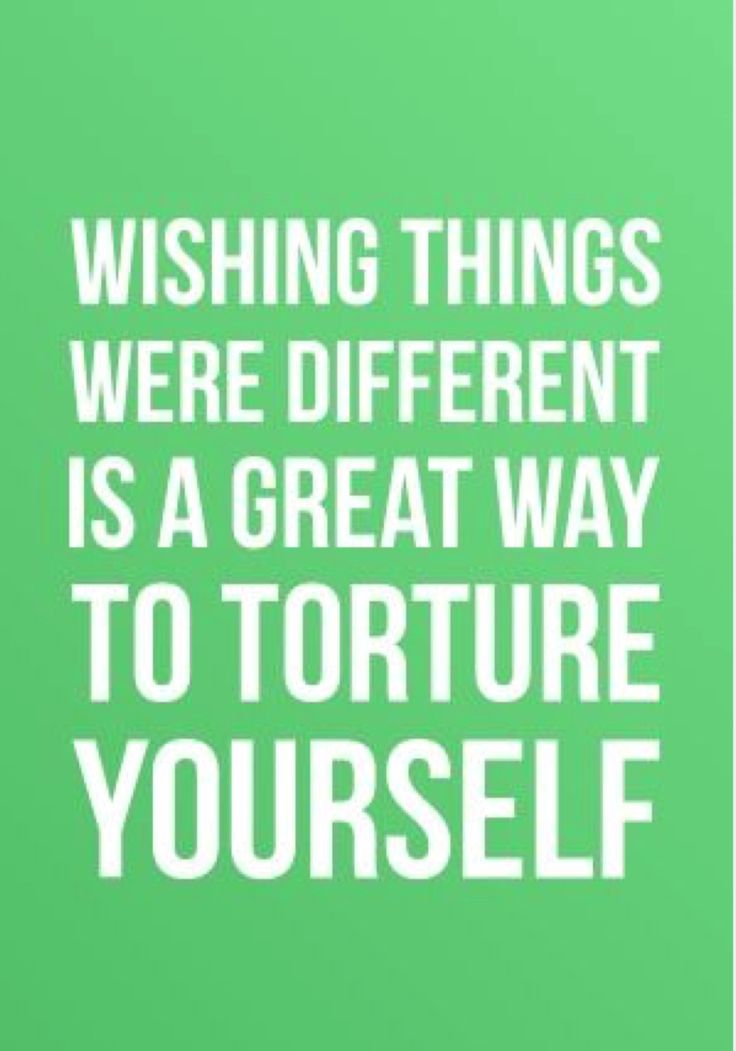
Stop wishing things were different

We seem to be living in a world where, for many people, things seem a bit upside down. Many people are struggling with today’s social and political climates, with global warming, the economy, and with everyday stresses and anxieties stemming from our jobs, families and perhaps even friends. Many people seem to be wishing things were different.

I get it. But what happens to our minds, our bodies and our mental health when we keep wishing things were different? What likely is happening is that our stress and anxieties are increasing, leaving us feeling both emotionally and physically exhausted. Wishing things were different not only robs us of the opportunity to accept things as they are, but also speaks to our desire for and total lack of control over external forces. When we are wishing things were different, what we really are saying is that we wish we had control over what other people think, say or do. We are saying we wish we had control over things that are, in actuality, well beyond our control.

Anxiety is borne, in part, when we stress over things we really cannot control. Wishing things were different heightens our anxiety because we are faced with the reality that we cannot control what other people think, say or do. Furthermore, wishing things were different can keep us stuck in the past, leaving us ruminating over things we or other people have said, done or thought. Just as we have no control over what other people think, say or do, we similarly have no control—no power—to go back and change what we or others may have said or done in the past. Stop wishing things were different.

When we stop wishing things were different, we empower ourselves to really consider what we can control. We also give ourselves permission to stop fighting and accept that things just are the way they are. That is not to say that we must resign ourselves to accept situations or relationships that are emotionally or physically unsafe. Nor does accepting the way things are mean that we cannot work toward making the future better for ourselves and others. When we stop wishing things were different, we take back our power and remind ourselves of what we really can control, namely what we think, say or do.

When you get right down to it, we really have control over just one thing, and that is ourselves. We can choose how we want to respond to external stimuli. We can choose how we want to respond to what others say. We can choose how we want to respond to what others do. We can choose to remind ourselves that we really have no control over what others think. When we stop wishing things were different, we empower ourselves to make better choices about how we want to respond to external stimuli.

Is it time for you to stop wishing things were different? Is it time for you to stop and think about what you really can and cannot control? Is it time for you to step back into your power and choose how you want to respond to other people, to external stimuli? Stop wishing things were different and take back your power.

~ Karri Christiansen, MSW, LSW, CADC, CCTP

Stop wishing things were different

How do you handle frustration?

It seems that more and more, many people are finding themselves feeling frustrated more and more often with more and more things, people, and situations. What leads to this very normal feeling and how are we supposed to manage that feeling?

According to the Oxford dictionary, the word “frustrated” means feeling or expressing distress and annoyance, especially because of inability to change or achieve something. Which, for many people means feeling out of control due in part to expectations. This can leave folks feeling powerless, disappointed, angry and/or stuck. But how do we manage this feeling of frustration? When we set our expectations so high that either we or others cannot reach them, we may be left feeling frustrated or disappointed. When it feels as though a situation is out of our control or isn’t going our way, we may be left feeling frustrated or angry. This feeling of frustration is normal, but for some can cause distress.

One way to manage feelings of frustration is to really think about what we do and do not have control over. What is within our locus of control? One exercise that may help with this is to take a writing utensil and outline your opposite hand with it. Inside that hand, write down what you know you really and honestly have control over, such as yourself and the way you choose to respond to things. Outside the hand, write down all the things you do not have control over, such as other people and the way they think or behave. Sometimes, seeing a visual representation of what we really have control over helps calm us, reminding us that so many things are outside of our control but what we can control is our behavior, reactions and responses to whatever or whomever is frustrating us.

Another way to manage feelings of frustration is to notice where in your body you notice that feeling. What physical sensations come up for you when you are feeling frustrated? Do you notice a tightening in your stomach, chest or face? Do you notice a warmth growing throughout your body? Do you notice your hands or jaw clenching? Can you soothe that feeling by taking a few long, slow deep breaths? Can you go for a short walk or run? Can you listen to some calming music? Can you take a few minutes to meditate?

Most people feel frustrated from time to time. When that happens, it may behoove us to simply consider why we are feeling frustrated. What is it about this person, event or situation that is leaving us feeling frustrated? Is something happening to leave you feeling as though your boundaries are not being respected? Does that leave open the possibility to having a conversation with someone about those boundaries? Is something happening that is leaving you feeling powerless? Does that mean you need to do something healthy so that you feel empowered?

When we give ourselves permission to really think about our feelings, notice where they reside in our bodies and take steps to soothe those feelings, we can go about our business with a better sense of calm and peace. Feelings of frustration sometimes can lead us down the rabbit hole of unhealthy venting, which sometimes can fuel the flames of frustration, leaving us feeling even more frustrated. Taking the time to self-soothe and really consider why we are feeling frustrated can help calm us.

Feeling frustrated happens with most people. What is that feeling of frustration telling you? Can you give yourself permission to slow down and examine that feeling, where it resides in your body and respond to what your body is telling you? Can you take a few calming breaths or otherwise self-soothe? Do you need to take steps to address the underlying feeling of disappointment or powerlessness by setting healthy boundaries? Can you walk or run it out? Addressing the feeling of frustration quickly in healthy ways can help dissipate that feeling before it grows and leads to unhealthy venting. How can you address your feelings of frustration?

~ Karri Christiansen, MSW, LSW, CADC, CCTP

How do you handle frustration?

How will you celebrate your independence?

Today in the United States, many of us are celebrating the country’s independence. This makes me think about that word, “independence,” and what it means. Of course, it means many different things to many different people.

According to Merriam-Webster, the word independent means: not subject to control by others. In my world of mental health and substance use disorders, being independent could mean being free of undue influence of others, or being free of a substance or drug of choice. In either case, people could consider how they would like to celebrate their independence this 4th of July.

Some people may find it difficult to celebrate their independence today, particularly if they are in abusive or controlling relationships, or if they are struggling with substance use disorders. Others may find it difficult to celebrate their independence if they find they are living with mobility concerns. Still others may find that they are unable to celebrate their independence if they are facing housing issues, poverty or incarceration.

For others, though, today might be a good day to consider how you might assert your independence. That may mean considering what the word “independence” means to you. Could it mean giving yourself permission to set and enforce healthy boundaries, particularly in relationships that have become toxic? Could it mean summoning the strength to end a relationship that no longer serves you, is unhealthy, or brings you joy? Could it mean distancing yourself from people or places that leave you feeling trapped, insecure or used? Could it mean making the call to enter treatment for substance use?

Perhaps on this Independence Day, celebrating or advocating for your independence means you celebrate you and all the healthy ways you take care of yourself. Perhaps on this Independence Day, you engage in healthy self-care and put your needs, wants, hopes and desires at the forefront. Perhaps on this Independence Day, you celebrate all you are and all your potential and give yourself permission to take that next step you’ve been thinking about for so long in your career, family life, or relationships.

When we give ourselves permission to think about what that word “independence” means to us, we really can think about how we want to assert and celebrate our independence. Maybe that means setting ourselves free from the shackles of a controlling other or calling for help to escape an abusive relationship. Maybe that means setting a boundary in a toxic relationship, be that with a coworker, family member, or friend.

We have the right to claim our independence in a way that is respectful of others yet also ensures that our needs are met. We have the right to claim our independence in a way that leaves both ourselves and others with dignity. We have the right to claim our independence from those who leave us feeling oppressed, less than, or used.

Sometimes in life, we have to take care of our own needs. Sometimes in life, we have to advocate for ourselves. How can you claim your independence today? What would it mean for you to assert your independence today? Can you celebrate your independence today?

~ Karri Christiansen, MSW, LSW, CADC, CCTP

How will you celebrate your independence?

What happens when we “one up” or “one down” with others?

We seem to be living in an era where people often engage in comparison. Thanks in part to the advent of social media, with people posting their highlight reels and making it seems as though their lives are nearly perfect, many people find that they engage in a dangerous game of comparing their lives to those of others, even those they do not know personally. Where, you may ask, is the danger in that?

The danger lies in the fact that we cannot really know what is going on in the lives of others unless we know them personally and show an interest in who they are and what they are doing. That requires some measure of vulnerability and courage to connect in real life, on a human level. Social media largely prevents us from really connecting and reinforces the often subconscious act of comparing our lives to others. That happens with social media, and in real life. Comparing our lives to those of others is a slippery slope that can leave us feeling either better than or less than others. It encourages us to “one up” or, sometimes, “one down” with others so that we feel in some way either better than or less than others. Either way, doing so is bad for our mental health.

When we “one up” or “one down” with others, what we are doing is encouraging feelings of insecurity to fester within us. The more secure we are in ourselves and our own lives, the less we will feel the need to engage in those “one up” or “one down” behaviors of comparison. The more secure we are in ourselves and our lives, the more we will come to realize that comparison is a futile act. There will always be someone who has more and there will always be someone who has less. The question is, can you be okay with what you have while working toward what you want?

When we engage in comparison, when we “one up” or “one down” with others, we lose the ability to evaluate our own lives accurately. We look at our lives through a lens that is cloudy. And that can leave us feeling insecure. When we “one up” with others, what we really are doing is saying, “I have to prove to myself and others that I am better than someone else.” The same is true when we “one down” with others. When we say we have it worse than others, we are saying that we cannot appreciate all we have and all we are. This sort of behavior rarely leaves us feeling empowered, and in fact, can leave us feeling as though we are never good enough, smart enough, rich enough, never enough of anything at all.

While most of us engage in comparison at some point, it may behoove us to remember that doing so really only robs us of the chance to be happy with who we are, what we are and what we have. Yes, someone may have it better than us. That does not have to mean that we are somehow less than. Yes, someone may have it worse than us. That does not mean we are somehow better than. We just are. We just are wonderfully made, perfectly imperfect humans and that is all we need to be. We do not need to be better than or worse than to prove anything to anyone. We can just be us.

Can you give yourself permission to free yourself from comparison? Can you give yourself permission to appreciate who and what and where you are in your life without the need to compare yourself and your life to others? Can you remind yourself that comparison is the thief of joy?

~ Karri Christiansen, MSW, LSW, CADC, CCTP

What happens when we “one up” or “one down” with others?

Is it time to spring clean your mind?

For many people, spring can be a season of renewal. Many people approach this new season with hopes of spring cleaning their homes, decluttering and making their spaces tidy and comfortable to live in. But, can this also be a time to spring clean your mind?

What could it look, sound and feel like to do a little spring cleaning of the mind?

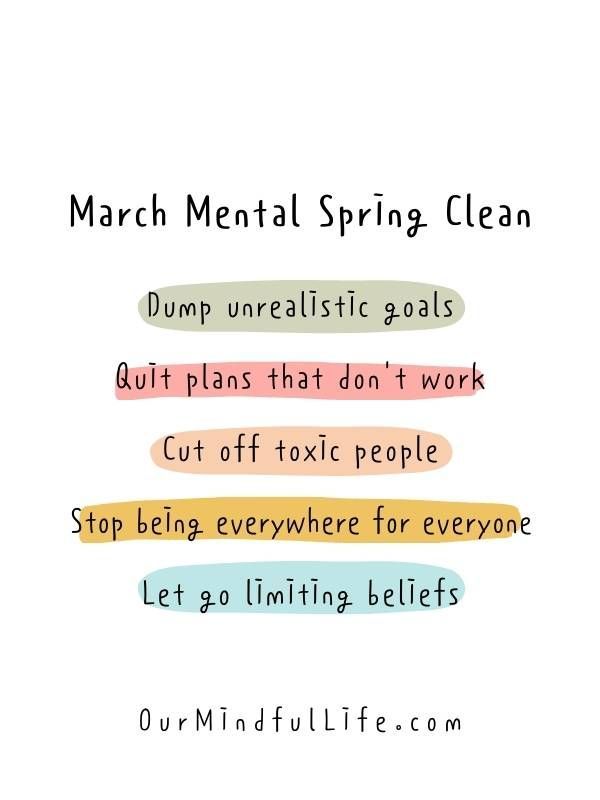
For starters, it could look like replacing some of your negative self-talk with positive self-talk. This could take the form of thought stopping, or literally saying “stop” when we notice ourselves going down the rabbit hole of negative self-talk or self-shaming talk. This also could mean practicing positive self-affirmations, whether that is in our minds or out loud so our brains can hear. Remember that your brain is listening to everything you say to yourself, all day, every day, so it is important to speak kindly to yourself.

Spring cleaning the mind also could mean ridding ourselves of all the negativity that we encounter on social media. Maybe that means whittling down your friends list to include only those people with whom you have a real connection, or cutting out those folks who engage in negativity. For some, that may mean a social media detox of anything from a few days to a few weeks, to a few months or even forever. For some people, a social media detox can mean setting a time limit for consumption, be it just a few minutes to an hour. Taking a break from social media can help us reset and regroup, and really think about who and what is important to us.

For some people, a spring cleaning of the mind can mean abandoning unrealistic or perfectionistic goals. Maybe this means rethinking what some of your goals are, really giving some thought to what is and what is not feasible given your current situation. Maybe that means giving some thought to what it is you really want to accomplish, and setting small goals along the way to that one big goal. This also can include some self-compassion, particularly if you found a goal to be impossible to reach at this stage in life.

A good mental spring cleaning also could mean letting go of the need to be everything and everywhere for people who either unwilling or unable to reciprocate. Maybe that means setting healthy boundaries with the people in your life. Maybe that means saying “no” to the things and people who no longer bring you joy. Setting boundaries is an act of self-love and is in no way selfish. Boundaries teach others how to respect us. This also could mean asking for help with caregiving, specific tasks or chores around the house or yard. Asking for help takes more courage than does suffering in silence.

Spring can be a time of renewal for many people. In addition to noticing flowers start to bloom, perhaps this can be a time to offer your mind a chance to bloom into healthy thoughts and actions. Letting go of unrealistic goals and expectations of and for yourself and others is a beautiful way to embrace the new season. Offering yourself a chance to really think about who and what is important in your life can make transitioning into this new season a time of real renewal. What might you be able to do to spring clean your mind?

~ Karri Christiansen, MSW, LSW, CADC, CCTP

Is it time to spring clean your mind?

Be careful of the stories you tell yourself

We as humans are great at telling stories. Telling stories is one of the ways we share with other humans. We share stories to let others know who we are, where we come from, what our hopes and dreams are. We tell stories to connect with others. But what happens when we start telling ourselves stories?

Sometimes, we can tell ourselves great stories about where we’ve come from and where we’re headed. Those can be good stories, depending on how we shape our narratives. Other stories, though, can be rife with half-truths or complete malarkey. Many of us tell ourselves stories to avoid pain, to attempt to control a narrative, to give ourselves the illusion that we are in control of something we actually have little to no control over. These are the stories we might want to avoid.

Sometimes, we tell ourselves stories in an attempt to make ourselves feel better about a particular situation, or person, or event. We may believe these stories are true, but are they really? Do you have evidence to prove that your story is true? Or, are you filling in gaps of knowledge or information with something that may seem to make sense but isn’t backed up with evidence?

Sometimes, we tell ourselves stories to avoid having to change ourselves. This can happen when we place the blame for a situation or event on someone else. Doing so can leave us with a story in our heads that absolves us of the responsibility for someone else’s hurt feelings. And, yes, while we are not responsible for another person’s feelings, we can contribute to a person’s feelings. When we absolve ourselves of the responsibility for hurting someone emotionally, verbally, mentally or physically, and tell ourselves that we are not to blame when we, in fact, are to blame, we’re attempting to control a narrative that we just don’t like. Doing so can leave that other person even more hurt. Sometimes, what needs to happen is that we make an apology or change our behavior.

Sometimes, we tell ourselves stories that keep us stuck in a situation, like an abusive or unsatisfying, toxic, or dangerous relationship. We tell ourselves that no one else will love us, that we are unworthy of love, that we can’t leave. These stories can keep us stuck in something when we deserve better, which, in fact, we do.

We all tell ourselves stories. Some are good and some are not. When we fill in gaps of information or knowledge with stories without looking for evidence to support our stories, we run the risk of getting stuck in a narrative that likely is not helpful to ourselves or other people. Be wary of the stories you are telling yourself, and make sure you have evidence to support your stories.

~ Karri Christiansen, MSW, LSW, CADC, CCTP

Be careful of the stories you tell yourself

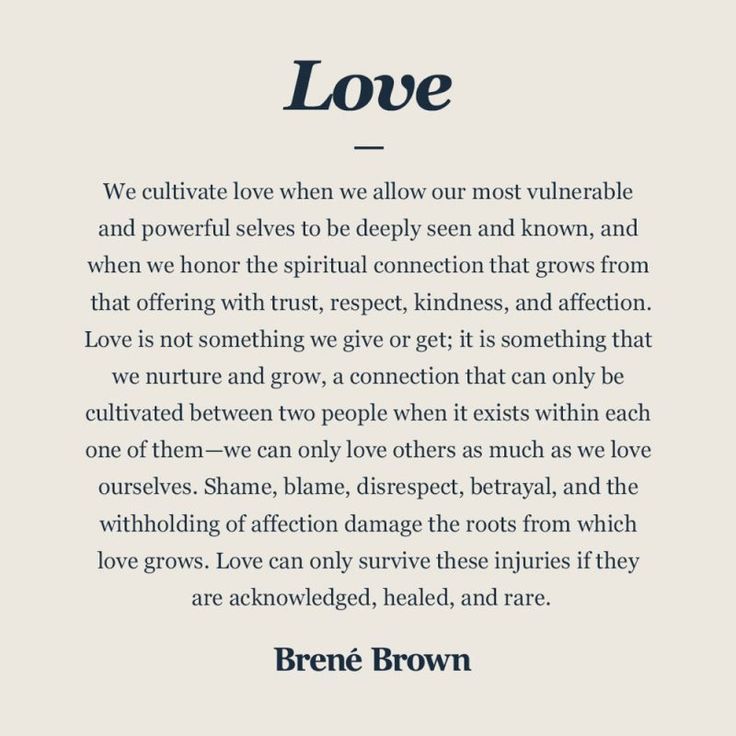
Vulnerability is the path to love

It seems as though Valentine’s Day is upon us, and for many people the holiday can evoke feelings of both happiness and sadness. Many people feel as though they must be partnered to enjoy the holiday, but there is more than one way to celebrate this day of love.

What is love, anyway? Romantic love is just one type of love. While romantic love, or Eros, is perhaps the best known type of love, there are many others. There is the love of friendship, and the love of family. There is the love of community and of people in general. And there is the type of love that grows over time.

There are many kinds of love, and myriad ways in which we can feel and share love. If we look for it, love really is all around us. And, if we listen, people often tell us they love us in many different ways.

How do we notice love when doing so can sometimes feel very challenging? How do we nurture and nourish love? Doing so often requires some measure of vulnerability. When we allow ourselves to really be seen and heard, we open the door to love. Doing so can require some measure of courage, because vulnerability can be uncomfortable, even scary, for many people.

Giving ourselves permission to be vulnerable means that we open ourselves up to rejection, but also can mean that we open ourselves up to acceptance, for who and what we are. For all our foibles, imperfections and flaws. And, letting others see all our foibles, imperfections and flaws can be scary. But if we fail to let people see who we really are, it could leave us feeling as though we never really are seen, heard, understood, and, ultimately, loved.

Letting ourselves be loved means that we let ourselves really be seen. Doing so can be scary, yes. Hiding parts of ourselves from others prevents them from really understanding who we are, and it is that understanding that nurtures and nourishes love. On the flip side, offering our understanding and acceptance to others also can help grow love, nurture relationships and let them blossom.

When we live in shame or keep parts of us hidden, it is hard to nurture love of others, love of self and love for others. When we live in shame or keep parts of us hidden, we are not giving others the opportunity to love our authentic selves, the real us. Shame is a barrier to love. When we fail to give ourselves permission to be vulnerable by keeping parts of us hidden, we fail to give others the chance to really know and love us.

Shame often is what keeps us from practicing vulnerability. Shame tells us we are not worthy of love, of belonging, of being understood. Shame lives in the shadows. Vulnerability lets us step into the light, be seen and heard and understood, and, loved.

Can you give yourself permission to practice vulnerability? Can you step out of the shame shadows and let yourself really be seen, be heard and be understood? Can you give yourself permission to accept love?

~ Karri Christiansen, MSW, LSW, CADC, CCTP

Vulnerability is the path to love

Can we enjoy being wrong?

It seems as though we are living in an era when many people have concerns about being wrong, and what being wrong says about them. We currently live in a time when we are flooded with misinformation and disinformation, with many people doubling-down on their beliefs even in the face of new or updated information, or information that runs contrary to their strongly-held beliefs. We are living in an era when people seemingly cannot accept even the idea that they may be wrong.

What would it mean if we were to entertain the notion that we could, in fact, be wrong? It seems as though many people believe that being wrong carries some heavy meaning about them as human beings. What if that weren’t true? What if being wrong could be joyful, pleasurable?

In the book “Think Again,” Adam Grant encourages us to consider not just that we could be wrong in our thinking, but the idea that being wrong opens us up to the possibility of learning something new. What if instead of carrying the belief that being wrong means we somehow are defective as a human being, we consider the notion that we could be wrong about all sorts of things and that means we could be open to learning something new.

What if being wrong doesn’t say something about you as a human being other than the fact that you are open to learning? Could you take pleasure in the idea of learning something new? Can you entertain the notion that you can both learn something new and still hold onto your beliefs?

We can hold both the idea of being wrong AND stay true to our beliefs while entertaining the idea that others may have new or updated information. That does not have to say anything about who we are as humans, other than that we may have just discovered some new piece of information, as well as something about ourselves.

Being wrong is not a character flaw. Being wrong does not have to mean that we have to upend our way of thinking. It just means that we can be open to new ideas or new information. When we double-down on what we already think we know, we do not leave any room for learning. When we double-down on what we think we already know, we lose an opportunity to change and grow as people, as thinkers. It seems there is a lot of that happening now, in the age of misinformation, disinformation and living in the echo chamber of social media.

How do we open ourselves up to the possibility that we could be wrong? We enter into conversations with people who may think differently than we do and approach them with curiosity and compassion. We entertain the notion that we may not be the smartest person in the conversation or in the room. And we admit to ourselves that if we think we are the smartest person in the conversation or in the room, we likely are in the wrong room.

Life should be about learning. Learning is how we grow, change and evolve. When we open ourselves up to the idea of learning, we give ourselves permission to check our facts, vet our news sources and engage in compassionate conversation with people who think differently than we might.

Can you give yourself permission to consider that you may be wrong … from time to time? Can you give yourself permission to be open to new ways of thinking? Can you think like a scientist by checking your facts, vetting your sources, and verify that you have not been fed misinformation or have fallen prey to disinformation? Being wrong is not a character flaw. Give yourself permission to be a lifelong learner.

~ Karri Christiansen, MSW, LSW, CADC, CCTP

Can we enjoy being wrong?

When the world seems to be spinning out of control, what are we to do?

Election season is upon us in the United States, leaving many people feeling concerned, frightened, fearful for the future and as though the country is coming apart at the seams. Couple that with climate disasters such as hurricanes, flooding and drought, as well as shootings and violence that seemingly occur on a daily basis, and many people may be feeling as though the world is spinning out of control.

These things, as well as a plethora of others, may leave us feeling as though we haven’t control over much of anything at all. Yes, we can do our part and vote our consciences on or before Election Day. Yes, we can take steps to reduce our carbon footprint and maybe make a small dent in combating climate change. Yes, we can be peaceful citizens and avoid violent confrontations with others. But much of what is happening in the world is well beyond our control. How do we come to terms with what is within and what is outside of our control?

One of the things we can do is recognize that what we do have control over largely is the being reading these words. We can control what we say and do, how we act and behave toward ourselves and others. We can to some extent control what we think and how we share those thoughts and with whom. Other things, though, are likely outside of our locus of control.

We can control how we choose to respond to the goings-on in the world, in our country, in our neighborhoods and communities. We can control how we choose to respond by giving ourselves permission to slow down and think about our next steps. We can control how we choose to respond to things by giving ourselves permission to be kind and compassionate toward ourselves and others. And we can remember that we have little to no control over what others think, say or do. Do we want to respond to whatever is happening with anger, verbal or physical violence? Or do we want to respond with grace and compassion?

Offering ourselves compassion and kindness for our sometimes challenging feelings regarding all that is transpiring around us can help us offer that same compassion to others. It behooves us to remember that while others may think and feel differently about politics, climate change, the Chicago Bears, that does not mean that their thoughts and feelings are invalid. They’re just different. And we can agree to disagree, peacefully, and move on to other subjects of discussion.

If we choose to disagree on a certain topic of discussion, perhaps that means setting healthy boundaries with others, be it friends, family members, colleagues. Healthy boundaries can be agreed upon amongst people, and can be held with compassion. Boundaries teach others how to respect us, and tell others what we will and will not tolerate.

Yes, it may seem as though the world has become unglued. Yes, you may experience challenging feelings about everything that is going on. What are those feelings telling you, about yourself, your values, the things and people you hold near and dear? Check in with yourself. Offer yourself grace and compassion so you can do so freely with others. And, set and enforce healthy boundaries.

~ Karri Christiansen, MSW, LSW, CADC, CCTP

When the world seems to be spinning out of control, what are we to do?