
Can we enjoy being wrong?

It seems as though we are living in an era when many people have concerns about being wrong, and what being wrong says about them. We currently live in a time when we are flooded with misinformation and disinformation, with many people doubling-down on their beliefs even in the face of new or updated information, or information that runs contrary to their strongly-held beliefs. We are living in an era when people seemingly cannot accept even the idea that they may be wrong.

What would it mean if we were to entertain the notion that we could, in fact, be wrong? It seems as though many people believe that being wrong carries some heavy meaning about them as human beings. What if that weren’t true? What if being wrong could be joyful, pleasurable?

In the book “Think Again,” Adam Grant encourages us to consider not just that we could be wrong in our thinking, but the idea that being wrong opens us up to the possibility of learning something new. What if instead of carrying the belief that being wrong means we somehow are defective as a human being, we consider the notion that we could be wrong about all sorts of things and that means we could be open to learning something new.

What if being wrong doesn’t say something about you as a human being other than the fact that you are open to learning? Could you take pleasure in the idea of learning something new? Can you entertain the notion that you can both learn something new and still hold onto your beliefs?
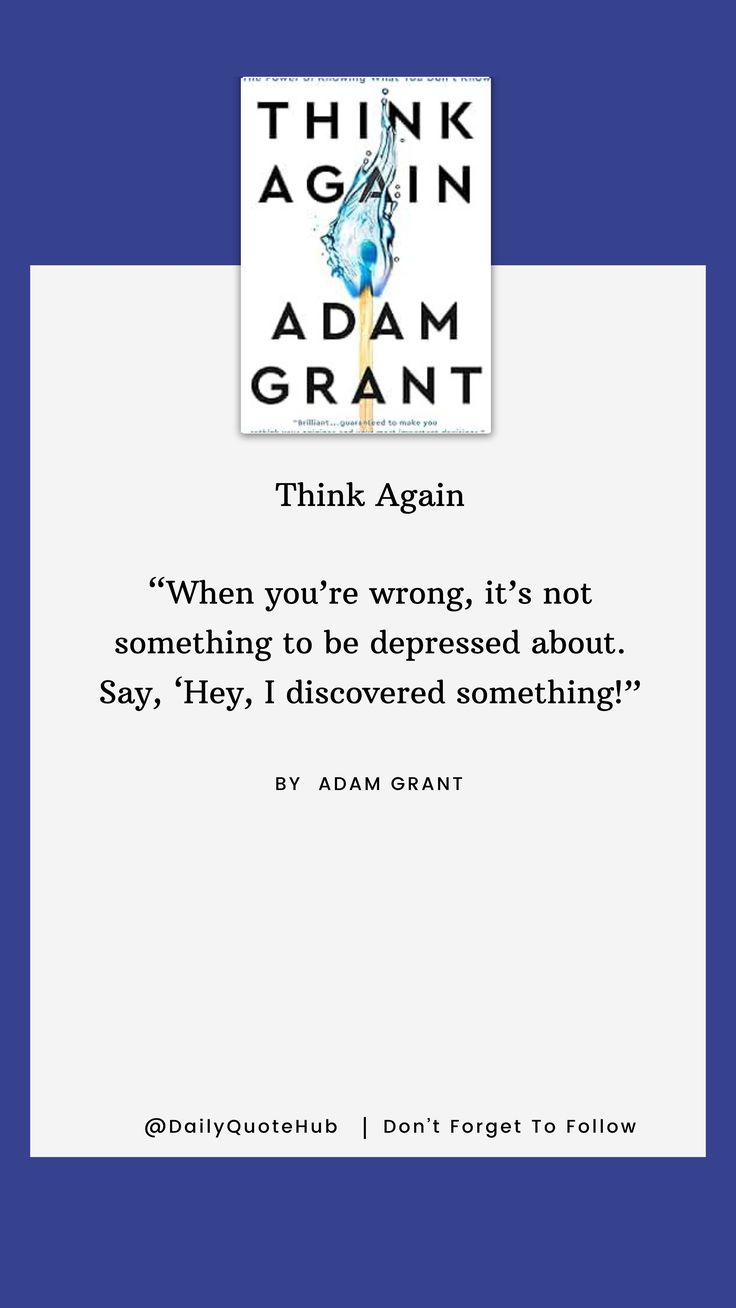
We can hold both the idea of being wrong AND stay true to our beliefs while entertaining the idea that others may have new or updated information. That does not have to say anything about who we are as humans, other than that we may have just discovered some new piece of information, as well as something about ourselves.

Being wrong is not a character flaw. Being wrong does not have to mean that we have to upend our way of thinking. It just means that we can be open to new ideas or new information. When we double-down on what we already think we know, we do not leave any room for learning. When we double-down on what we think we already know, we lose an opportunity to change and grow as people, as thinkers. It seems there is a lot of that happening now, in the age of misinformation, disinformation and living in the echo chamber of social media.

How do we open ourselves up to the possibility that we could be wrong? We enter into conversations with people who may think differently than we do and approach them with curiosity and compassion. We entertain the notion that we may not be the smartest person in the conversation or in the room. And we admit to ourselves that if we think we are the smartest person in the conversation or in the room, we likely are in the wrong room.

Life should be about learning. Learning is how we grow, change and evolve. When we open ourselves up to the idea of learning, we give ourselves permission to check our facts, vet our news sources and engage in compassionate conversation with people who think differently than we might.

Can you give yourself permission to consider that you may be wrong … from time to time? Can you give yourself permission to be open to new ways of thinking? Can you think like a scientist by checking your facts, vetting your sources, and verify that you have not been fed misinformation or have fallen prey to disinformation? Being wrong is not a character flaw. Give yourself permission to be a lifelong learner.

~ Karri Christiansen, MSW, LSW, CADC, CCTP
Can we enjoy being wrong?

When the world seems to be spinning out of control, what are we to do?

Election season is upon us in the United States, leaving many people feeling concerned, frightened, fearful for the future and as though the country is coming apart at the seams. Couple that with climate disasters such as hurricanes, flooding and drought, as well as shootings and violence that seemingly occur on a daily basis, and many people may be feeling as though the world is spinning out of control.

These things, as well as a plethora of others, may leave us feeling as though we haven’t control over much of anything at all. Yes, we can do our part and vote our consciences on or before Election Day. Yes, we can take steps to reduce our carbon footprint and maybe make a small dent in combating climate change. Yes, we can be peaceful citizens and avoid violent confrontations with others. But much of what is happening in the world is well beyond our control. How do we come to terms with what is within and what is outside of our control?

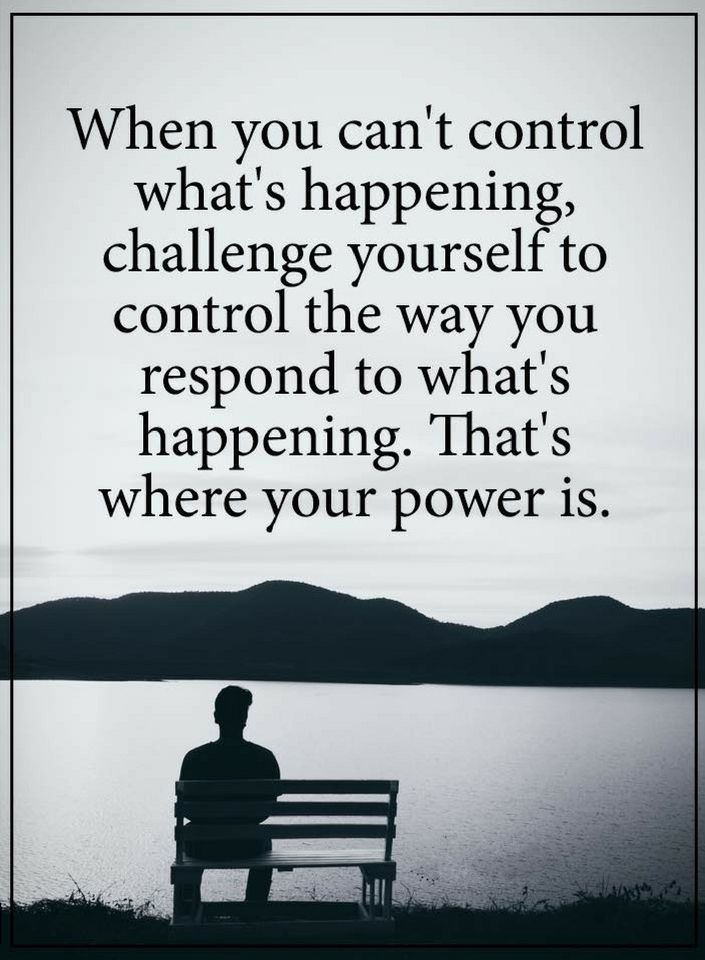
One of the things we can do is recognize that what we do have control over largely is the being reading these words. We can control what we say and do, how we act and behave toward ourselves and others. We can to some extent control what we think and how we share those thoughts and with whom. Other things, though, are likely outside of our locus of control.

We can control how we choose to respond to the goings-on in the world, in our country, in our neighborhoods and communities. We can control how we choose to respond by giving ourselves permission to slow down and think about our next steps. We can control how we choose to respond to things by giving ourselves permission to be kind and compassionate toward ourselves and others. And we can remember that we have little to no control over what others think, say or do. Do we want to respond to whatever is happening with anger, verbal or physical violence? Or do we want to respond with grace and compassion?

Offering ourselves compassion and kindness for our sometimes challenging feelings regarding all that is transpiring around us can help us offer that same compassion to others. It behooves us to remember that while others may think and feel differently about politics, climate change, the Chicago Bears, that does not mean that their thoughts and feelings are invalid. They’re just different. And we can agree to disagree, peacefully, and move on to other subjects of discussion.

If we choose to disagree on a certain topic of discussion, perhaps that means setting healthy boundaries with others, be it friends, family members, colleagues. Healthy boundaries can be agreed upon amongst people, and can be held with compassion. Boundaries teach others how to respect us, and tell others what we will and will not tolerate.

Yes, it may seem as though the world has become unglued. Yes, you may experience challenging feelings about everything that is going on. What are those feelings telling you, about yourself, your values, the things and people you hold near and dear? Check in with yourself. Offer yourself grace and compassion so you can do so freely with others. And, set and enforce healthy boundaries.

~ Karri Christiansen, MSW, LSW, CADC, CCTP

When the world seems to be spinning out of control, what are we to do?

Have you become comfortably uncomfortable?

It happens to the best of us. We find ourselves in a situation or set of circumstances that, after a while, leave us wondering how we got here. Suddenly, we find ourselves feeling stuck or trapped or imprisoned. Well, how did we get here? How did we become comfortably uncomfortable?

What does it mean to be comfortably uncomfortable? What it may mean for some people is that we have become numb to or even tuned out from the emotional pain we have endured for days, weeks, months, years, even decades. What may have started out as something promising, even hopeful, somewhere along the road became painful. We may not even be sure how that happened.

Likely, though, is that we have made a series of choices, however big or small, to remain in a situation or set of circumstances that no longer serves us, is unhealthy or even downright dangerous. These choices may have seemed reasonable, even right, at the time but things have changed. Something has changed. Maybe us.

Now, we find ourselves involved in something that no longer serves a purpose or no longer makes us happy or no longer leaves us feeling fulfilled. Yet, for some reason we have chosen to stay. We have become comfortably uncomfortable. We may not yet be at the breaking point. We may have subconsciously decided that leaving this particular situation or set of circumstances takes far more emotional and physical energy than we can muster right now. We may have subconsciously decided that we deserve to be where we are. We may have subconsciously made the choice to remain. We may have convinced ourselves that we haven’t the courage to change our circumstances or leave a given situation.

My guess is that you are more courageous than you give yourself credit for. My guess is that you are far braver than you think you are. Yes, leaving the situation you have found yourself in may be scary. Yes, abandoning the set of circumstances that have left you comfortably uncomfortable may leave you feeling grief. Yes, this could be difficult. Yes, you can do difficult things.

We have the power to make the decision to stop doing the thing that no longer brings us joy. We have the power to leave a situation that no longer serves us. We have the power to take back our lives so that we feel fulfilled, happy and healthy. We have that power. We just have to give ourselves permission to take our lives back. We deserve to take our lives back.

Sometimes, the thing that keeps us feeling comfortably uncomfortable is actually us. We’ve fallen prey to a series of choices that, while once may have served us, no longer make sense. We have the power to say “I’m done with this.” We have the power to say “No” to the thing that no longer brings us joy. We can take back our power by intentionally making healthier choices. We can take back our power by making choices that truly serve us. We can take back our power by making choices that are right for us and us alone. What can you do today to take back your power? How will you choose courage over comfort?

~ Karri Christiansen, MSW, LSW, CADC, CCTP

Have you become comfortably uncomfortable?