
Stop wishing things were different

We seem to be living in a world where, for many people, things seem a bit upside down. Many people are struggling with today’s social and political climates, with global warming, the economy, and with everyday stresses and anxieties stemming from our jobs, families and perhaps even friends. Many people seem to be wishing things were different.

I get it. But what happens to our minds, our bodies and our mental health when we keep wishing things were different? What likely is happening is that our stress and anxieties are increasing, leaving us feeling both emotionally and physically exhausted. Wishing things were different not only robs us of the opportunity to accept things as they are, but also speaks to our desire for and total lack of control over external forces. When we are wishing things were different, what we really are saying is that we wish we had control over what other people think, say or do. We are saying we wish we had control over things that are, in actuality, well beyond our control.

Anxiety is borne, in part, when we stress over things we really cannot control. Wishing things were different heightens our anxiety because we are faced with the reality that we cannot control what other people think, say or do. Furthermore, wishing things were different can keep us stuck in the past, leaving us ruminating over things we or other people have said, done or thought. Just as we have no control over what other people think, say or do, we similarly have no control—no power—to go back and change what we or others may have said or done in the past. Stop wishing things were different.
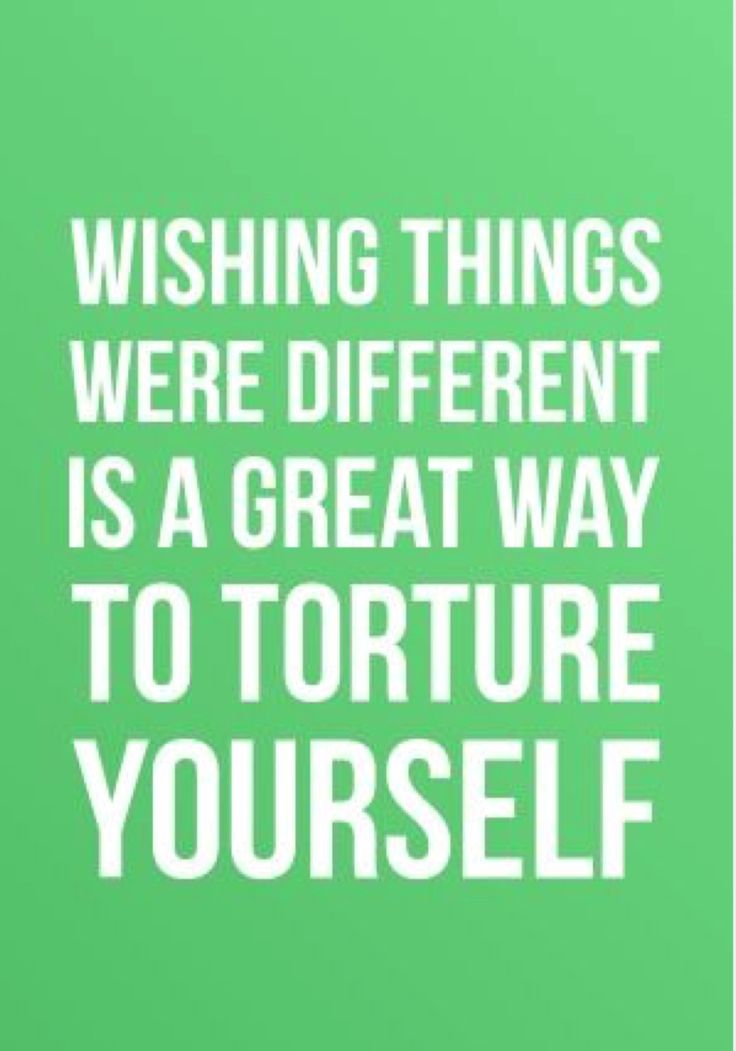
When we stop wishing things were different, we empower ourselves to really consider what we can control. We also give ourselves permission to stop fighting and accept that things just are the way they are. That is not to say that we must resign ourselves to accept situations or relationships that are emotionally or physically unsafe. Nor does accepting the way things are mean that we cannot work toward making the future better for ourselves and others. When we stop wishing things were different, we take back our power and remind ourselves of what we really can control, namely what we think, say or do.

When you get right down to it, we really have control over just one thing, and that is ourselves. We can choose how we want to respond to external stimuli. We can choose how we want to respond to what others say. We can choose how we want to respond to what others do. We can choose to remind ourselves that we really have no control over what others think. When we stop wishing things were different, we empower ourselves to make better choices about how we want to respond to external stimuli.

Is it time for you to stop wishing things were different? Is it time for you to stop and think about what you really can and cannot control? Is it time for you to step back into your power and choose how you want to respond to other people, to external stimuli? Stop wishing things were different and take back your power.

~ Karri Christiansen, MSW, LSW, CADC, CCTP
Stop wishing things were different

Why our words matter … it’s not just semantics

I have noticed in the past few weeks that many people seem to have difficulty describing what they are thinking and feeling. It seems as though many people struggle to put the right words to their emotional experiences. This has made me think about the words we use to describe our feelings and emotions, and how important it is to use the right words.

It seems as though many people use certain words interchangeably. And, while that may work in some instances, it might not for all instances. Yes, some words have perfectly acceptable synonyms, but others don’t often really fit the bill. And in order to really convey what one is experiencing emotionally so that we feel seen, heard and understood, it is important that we use the right words.

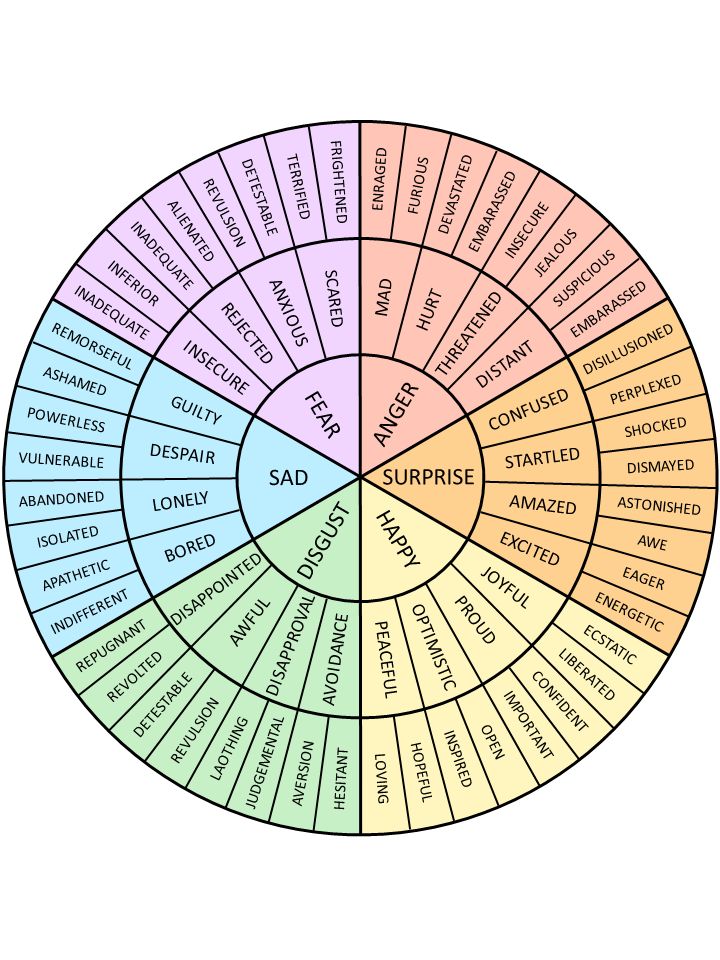
What does this mean, and how can we expand our emotional vocabulary? There are several ways to do so, including using the internet to find a list of words that can be used to describe our emotions. A good therapist also could provide a feelings wheel, which offers a decent range of emotional vocabulary words. There also are some good books out there that can help you use your feeling words to more accurately describe your experience. One that comes to mind is Brene Brown’s “Atlas of the Heart.”

When we fail to use the right words to describe what it is we are thinking or feeling, we may end up feeling as though whomever it is we are sharing with does not really understand us, leaving us feeling unheard. This can lead to an avalanche of feelings such as anger, resentment, disappointment or disconnection. So, when we are trying to explain what it is we are feeling, it might be helpful to think about what we really are experiencing so we can accurately convey to another person our experience.

For example, if we are feeling frustrated by a situation at work or home, but we say we are mad, it might be helpful to think about that “mad” feeling a little more. It might be helpful to go beyond that “mad” feeling to find a more descriptive word for our experience. Is the feeling scared? Betrayed? Rejected? Afraid? Disappointed? What really is going on?

The more we practice using more descriptive words to share our feelings, the more likely it could be that we leave a conversation feeling seen, heard and understood. That does, though, require us to really consider what it is we are feeling. That in itself may require us to slow down, think about our experience and find the right words to describe it.

Words matter. If during an exchange with someone, I feel myself getting tense, my chest tightens and my face reddens, and all I can come up with is the word “angry,” that might not be the best, most accurate descriptor of my feelings in that situation. Maybe what I really am feeling is embarrassed or hurt or uneducated on a topic. It really does matter that we use the right words to describe our experience. Otherwise, the other person could have a hard time responding properly to the feeling that is being shared. And that can leave the speaker, us, feeling unheard and invalidated.

Choose your words carefully. Give yourself a moment or two to really consider what you are feeling and try to find the words that most accurately describe that feeling. Doing so will give you and your listener an opportunity to forge a deeper, more meaningful connection.

~ Karri Christiansen, MSW, LSW, CADC, CCTP

Why our words matter … it’s not just semantics

Be careful of the stories you tell yourself

We as humans are great at telling stories. Telling stories is one of the ways we share with other humans. We share stories to let others know who we are, where we come from, what our hopes and dreams are. We tell stories to connect with others. But what happens when we start telling ourselves stories?

Sometimes, we can tell ourselves great stories about where we’ve come from and where we’re headed. Those can be good stories, depending on how we shape our narratives. Other stories, though, can be rife with half-truths or complete malarkey. Many of us tell ourselves stories to avoid pain, to attempt to control a narrative, to give ourselves the illusion that we are in control of something we actually have little to no control over. These are the stories we might want to avoid.

Sometimes, we tell ourselves stories in an attempt to make ourselves feel better about a particular situation, or person, or event. We may believe these stories are true, but are they really? Do you have evidence to prove that your story is true? Or, are you filling in gaps of knowledge or information with something that may seem to make sense but isn’t backed up with evidence?

Sometimes, we tell ourselves stories to avoid having to change ourselves. This can happen when we place the blame for a situation or event on someone else. Doing so can leave us with a story in our heads that absolves us of the responsibility for someone else’s hurt feelings. And, yes, while we are not responsible for another person’s feelings, we can contribute to a person’s feelings. When we absolve ourselves of the responsibility for hurting someone emotionally, verbally, mentally or physically, and tell ourselves that we are not to blame when we, in fact, are to blame, we’re attempting to control a narrative that we just don’t like. Doing so can leave that other person even more hurt. Sometimes, what needs to happen is that we make an apology or change our behavior.

Sometimes, we tell ourselves stories that keep us stuck in a situation, like an abusive or unsatisfying, toxic, or dangerous relationship. We tell ourselves that no one else will love us, that we are unworthy of love, that we can’t leave. These stories can keep us stuck in something when we deserve better, which, in fact, we do.

We all tell ourselves stories. Some are good and some are not. When we fill in gaps of information or knowledge with stories without looking for evidence to support our stories, we run the risk of getting stuck in a narrative that likely is not helpful to ourselves or other people. Be wary of the stories you are telling yourself, and make sure you have evidence to support your stories.

~ Karri Christiansen, MSW, LSW, CADC, CCTP

Be careful of the stories you tell yourself