
How do you handle frustration?

It seems that more and more, many people are finding themselves feeling frustrated more and more often with more and more things, people, and situations. What leads to this very normal feeling and how are we supposed to manage that feeling?

According to the Oxford dictionary, the word “frustrated” means feeling or expressing distress and annoyance, especially because of inability to change or achieve something. Which, for many people means feeling out of control due in part to expectations. This can leave folks feeling powerless, disappointed, angry and/or stuck. But how do we manage this feeling of frustration? When we set our expectations so high that either we or others cannot reach them, we may be left feeling frustrated or disappointed. When it feels as though a situation is out of our control or isn’t going our way, we may be left feeling frustrated or angry. This feeling of frustration is normal, but for some can cause distress.
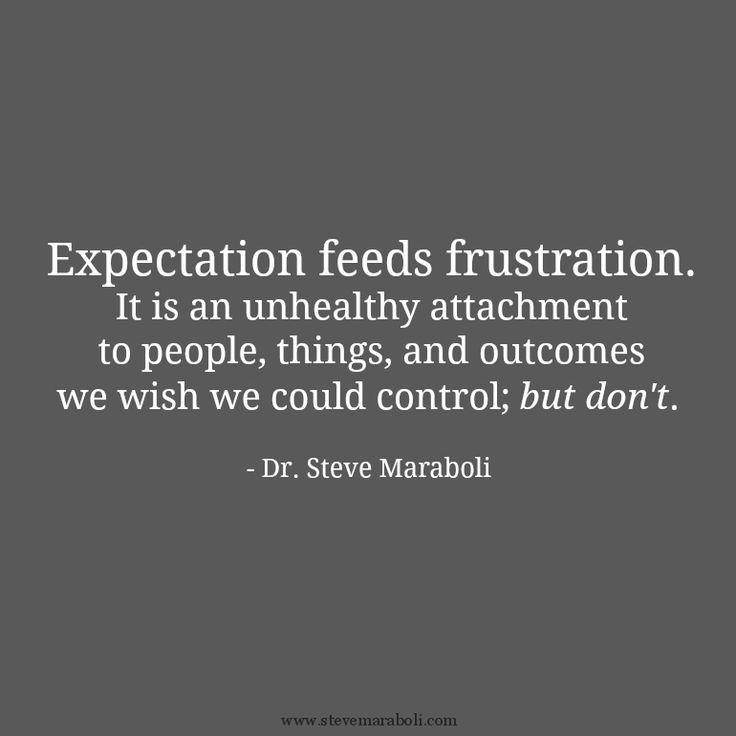
One way to manage feelings of frustration is to really think about what we do and do not have control over. What is within our locus of control? One exercise that may help with this is to take a writing utensil and outline your opposite hand with it. Inside that hand, write down what you know you really and honestly have control over, such as yourself and the way you choose to respond to things. Outside the hand, write down all the things you do not have control over, such as other people and the way they think or behave. Sometimes, seeing a visual representation of what we really have control over helps calm us, reminding us that so many things are outside of our control but what we can control is our behavior, reactions and responses to whatever or whomever is frustrating us.

Another way to manage feelings of frustration is to notice where in your body you notice that feeling. What physical sensations come up for you when you are feeling frustrated? Do you notice a tightening in your stomach, chest or face? Do you notice a warmth growing throughout your body? Do you notice your hands or jaw clenching? Can you soothe that feeling by taking a few long, slow deep breaths? Can you go for a short walk or run? Can you listen to some calming music? Can you take a few minutes to meditate?

Most people feel frustrated from time to time. When that happens, it may behoove us to simply consider why we are feeling frustrated. What is it about this person, event or situation that is leaving us feeling frustrated? Is something happening to leave you feeling as though your boundaries are not being respected? Does that leave open the possibility to having a conversation with someone about those boundaries? Is something happening that is leaving you feeling powerless? Does that mean you need to do something healthy so that you feel empowered?

When we give ourselves permission to really think about our feelings, notice where they reside in our bodies and take steps to soothe those feelings, we can go about our business with a better sense of calm and peace. Feelings of frustration sometimes can lead us down the rabbit hole of unhealthy venting, which sometimes can fuel the flames of frustration, leaving us feeling even more frustrated. Taking the time to self-soothe and really consider why we are feeling frustrated can help calm us.

Feeling frustrated happens with most people. What is that feeling of frustration telling you? Can you give yourself permission to slow down and examine that feeling, where it resides in your body and respond to what your body is telling you? Can you take a few calming breaths or otherwise self-soothe? Do you need to take steps to address the underlying feeling of disappointment or powerlessness by setting healthy boundaries? Can you walk or run it out? Addressing the feeling of frustration quickly in healthy ways can help dissipate that feeling before it grows and leads to unhealthy venting. How can you address your feelings of frustration?

~ Karri Christiansen, MSW, LSW, CADC, CCTP
How do you handle frustration?

What is your anxiety telling you?

From time to time, most people notice feeling anxious. In the United States alone, some 40 million people live with anxiety at any given time. Many people, though, often do not quite understand that their anxiety is trying to tell them.

How do we know when we’re feeling anxious? We may notice that our heart seems to be beating faster, that we feel nauseous or faint or lightheaded. We may notice that we start to perspire. We may notice that we are feeling out of control.

Anxiety can stem from many things, including work, family, friends, driving, flying or the possibility of health concerns. Anxiety tells us that there is something to be feared, or that we are in a dangerous situation. More often than not, though, what we are facing is less dangerous than it is uncomfortable. It might behoove you to remember that discomfort does not necessarily mean danger. Anxiety tries to convince us that that presentation we have to give is dangerous or that that mammogram we have to have will tell us we have cancer or that our plane will crash on the way to Italy. Are these things possible? Perhaps. Are these things likely? Perhaps not.

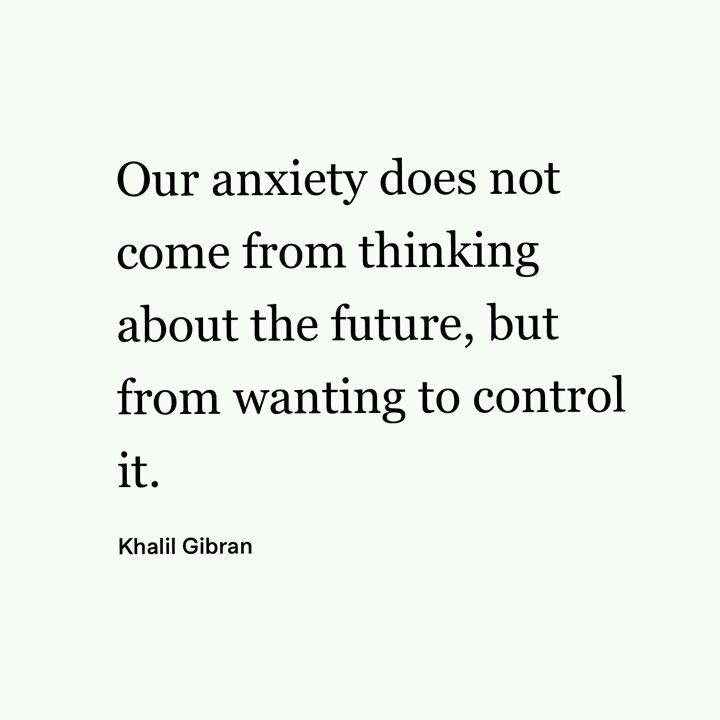
The thing about anxiety is that it tells us that if we worry enough about these things, we can somehow control the outcome. Anxiety tells us that we can somehow control the future or what other people think, say or do. Anxiety tells us that if we do this, that or the other thing, we can assert some control over what happens next. The fact of the matter is, though, that we have little to no control over the future or other people, in large part because people are often unpredictable.

When we try to control the future by performing certain behaviors or acts, what we are trying to do is rid ourselves of the worry about the future. If instead we try to remember what we really do have control over—what we think, say or do—we may start to feel a bit less anxious.

How do we manage symptoms of anxiety or approach situations with less anxiety. One of the ways to manage those pesky symptoms of anxiety is to remember to breathe. Oftentimes, when we feel anxious we may notice that we are holding our breath or breathing shallowly. If we give ourselves permission to slow down, take a few deep breaths that are longer on the exhale than the inhale, we can slow down our central nervous system and get out of fight or flight mode and start to feel less anxious. We also can remind ourselves to really look at the situation before us. Is it really dangerous or is it uncomfortable? This may require us to pause for a few moments and really get in touch with that feeling of anxiety, and that is okay.

Another way to manage symptoms of anxiety is to create some space and distance between us and that feeling of anxiety. If we say to ourselves, “Oh, I’m so anxious!” what likely will happen is that we will start to feel more anxious because we are identifying with that feeling of anxiety. If instead we say, “Oh, I notice that I am feeling anxious,” we create some distance between us and that feeling of anxiety. We start to feel less anxious.

Anxiety is like other feelings, and what feelings do is provide us with information about certain situations. It may do well to listen to your body and tend to your body’s needs. Is your anxiety leaving you feeling nauseous? Lightheaded? As though your heart is beating faster? These symptoms may be telling you that you need to take a breath. If we listen to our bodies, they will tell us what we need.

Millions of people on this planet live with anxiety. Most of us will feel anxious from time to time. That is normal. Anxiety provides information about the situation we are facing. That feeling of anxiety, like all feelings, provides data, information. If we can give ourselves permission to slow down, breathe, and really assess the situation, we may find that what we are facing really is more uncomfortable than it is dangerous. We may also realize that while we can control what we think, say or do, we largely haven’t much control over other people, the future, or certain outcomes.

What steps can you take to address your anxiety? Would it help to practice deep breathing? Do you need to speak to a trusted other or mental health professional? Do you need to pause and think about what you really do have control over? Do you need to remind yourself that anxiety is just a feeling that likely will pass? You have the power to manage your symptoms of anxiety.

~ Karri Christiansen, MSW, LSW, CADC, CCTP
What is your anxiety telling you?

Is it time to HALT the BS?

We are just two days into the new year and already I am hearing from people who are feeling stressed to the point of burnout, and as though the holiday season has left them feeling more tired than relaxed. I also am hearing from people sharing that their feelings of stress and anxiety and burnout and exhaustion have meant an increase in engaging in addictive behaviors as a way to somehow cope.

Those behaviors may have served a purpose at some point, but many people are finding that those same behaviors (such as consuming alcohol, marijuana or other substances, gambling, shopping or watching pornography) no longer are helping as much as they used to, or even at all. In many case, these behaviors are making things worse at home, work and school, with our family, friends and loved ones.

So why do we turn to such behaviors when, at best, they only work temporarily? Well, we do so because they once seemed to work for a while and we hope that they still will. Problem is just that: they only work temporarily and then we’re back to Square One.

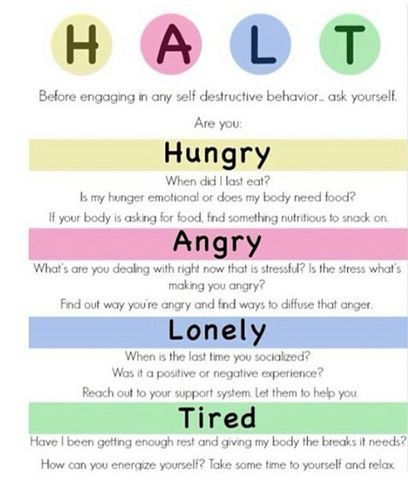
We often turn to our addictive behaviors when we are feeling hungry, angry, lonely or tired. In fact, many Twelve Step programs remind us of the acronym HALT to give us pause when we are thinking about engaging in one or more of our addictive behaviors. If we can give ourselves permission to think about what we really are feeling and what we really are needing, we sometimes can avoid engaging in the self-destructive behaviors of any type of addiction.

For many people, reminding themselves of the HALT acronym can be helpful. Sometimes, though, there is more than just hungry, angry, lonely or tired going on. Sometimes, there’s also boredom or stress. If we try to remember to HALT the BS, we may be even more successful at taming our self-destructive behaviors.

Some people find that when they’re bored, they also engage in self-destructive behaviors because they feel as though they have nothing else to do. What could happen instead of engaging in self-destructive behavior is reaching out to someone, playing a game with friends either online or in real life, baking, knitting or going for a walk or run.

Often, when people are feeling stressed, they turn to those things that somehow bring them some measure of comfort. That could be using alcohol or other substances, binge eating, shopping, watching pornography, or gambling. But it could mean engaging in exercise, meditation or calling a friend or family member, or watching a movie or reading a good book.

We can remind ourselves that while our self-destructive behaviors may once have served a purpose in our lives when we have felt hungry, angry, lonely, tired, bored or stressed, those behaviors ultimately usually leave us feeling worse, setting ourselves up for self-shaming and negative self-talk (which perpetuates the cycle of using). If we can give ourselves permission to think about what we really are feeling and what we really need, we can avoid engaging in behaviors that likely more than not will leave us feeling worse.

Is it time for you to HALT the BS? What are you really feeling? What do you really need? Is it time to reach out to someone? To eat healthy food? Is it time to think about why you are feeling angry and what a healthy response to that anger would be? Do you need some good sleep? Are you bored? Are you stressed? What healthy coping skills might you turn to to HALT the BS?

~ Karri Christiansen, MSW, LSW, CADC, CCTP
Is it time to HALT the BS?

You can’t self-care yourself out of burnout

For many people, it’s been a long year—and we still have a few weeks to go. For others, it’s been a rough start to the decade, having endured a global pandemic, what for many has been a challenging economy and now, a fraught election. We may be feeling stressed or anxious, or some combination thereof. Others, though, may be feeling something deeper, an exhaustion that just won’t go away. Many people are experiencing burnout.

What is burnout? And, how do we deal with it when we can’t just walk away from our jobs, our families or whatever else is causing extreme stress? Burnout happens when it seems that we cannot avoid stress and are feeling particularly anxious most, if not all, of the time. Burnout can be the result of giving too much of ourselves, such to the point that we feel we have little, if anything, left to give, be it to our jobs, our partners, our families, or whomever.

Burnout can feel like we have no control over some or all aspects of our lives. It can feel as though we have no say in how or when we do our work, be it with our schedule or our assignments or our workload. It can feel as though there is a lack of clarity over what your role is at work or at home. It can feel as though there is a lack of clarity about what is expected of you in any of your roles.

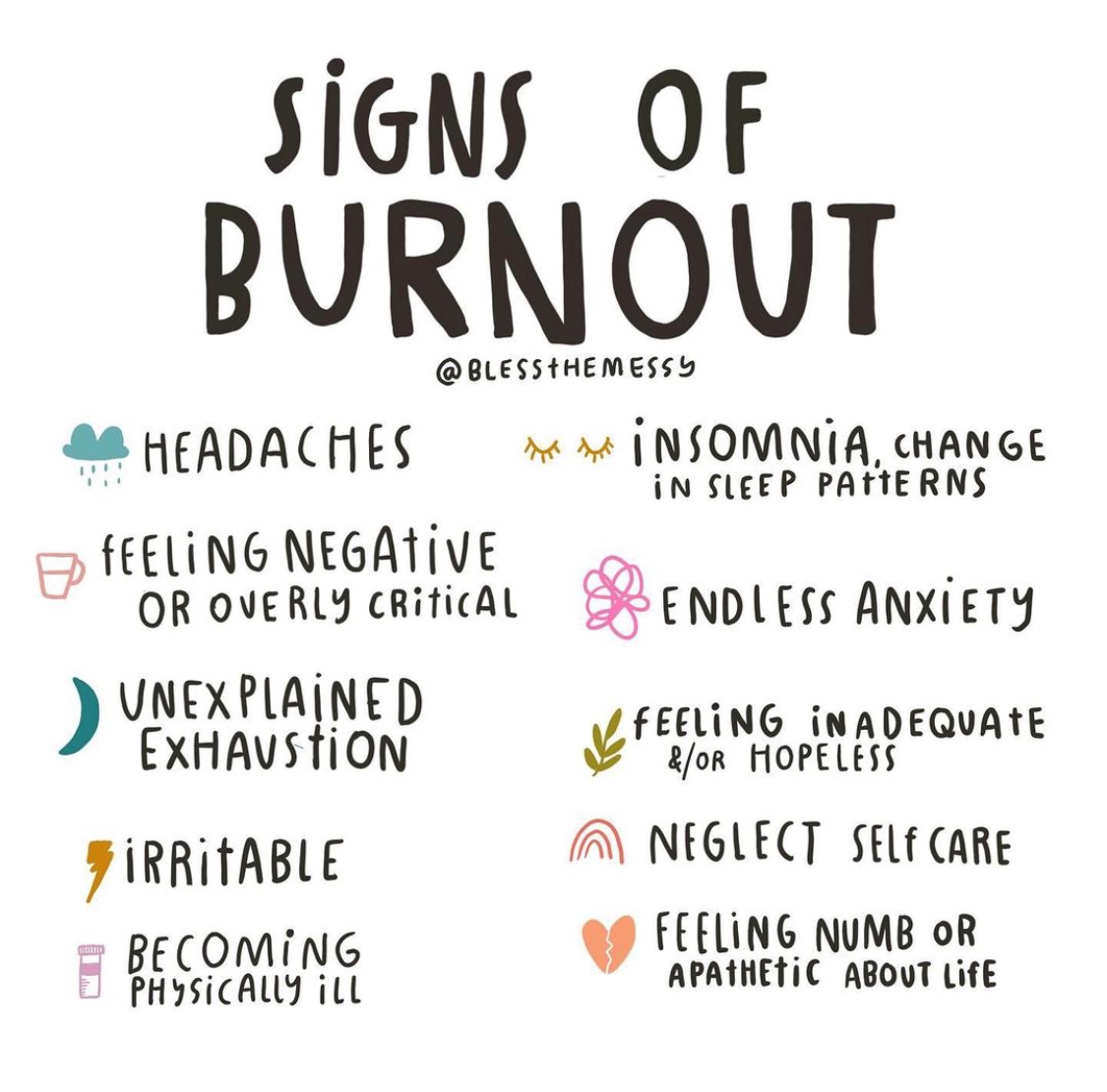
Burnout can manifest as irritability, leading to more frequent conflict with others. It can feel as though we either have too much or too little to do. It can lead to feelings of boredom. Burnout can also feel as though we haven’t the support we need to perform well in any of our roles, be it at work or at home. Burnout can lead to a lack of a work-life balance.

Many who experience burnout report frequent headaches, poor sleep and an inability to care for themselves. Others report that they have lost interest in activities they once enjoyed. Many of the symptoms of burnout are similar to those of depression and anxiety, and if left untreated, can actually lead to depression and anxiety.

It is important to take care of yourself in healthy ways if you notice yourself feeling burned out. It is important to practice good sleep hygiene, meaning going to bed and waking at about the same times every night and day. Most people do well with seven to nine hours of sleep.

It also is important to find healthy ways to manage stress. In addition to getting adequate sleep, it might be helpful to incorporate some exercise into your day. Studies show that at least 30 minutes of daily activity is helpful in warding off stress. Finding time for fun activities also can help with burnout.

Many people also find it helpful to set clear boundaries on their time, energy and space. That may mean having conversations with supervisors about workloads or with family members about care taking responsibilities.

One thing that is helpful to ward off burnout and to find some measure of joy in your life is practicing gratitude, which we have talked about before here. That does not have to mean that you’ve found a zillion dollars in a pot at the end of a double rainbow. It may mean that you enjoyed a really good morning beverage with someone you love. Staying connected with loved ones, be they family or friends, also can be helpful in managing burnout.

Lastly, while it may seem a good idea to comfort yourself with a piece of apple pie or chocolate cake or a venti double-caff, double-whip, double-caramel macchiato, or a three-blue-cheese-stuffed olive martini, that likely won’t help in the long run. What might help is nourishing yourself with healthy foods and staying hydrated with good, old-fashioned water.

Many people are experiencing burnout, especially now that we are in the winter holiday season. It is important to recognize the signs of burnout and to take care of yourself in healthy ways. Yes, self-care may help, but that is only part of the solution. Reach out to a trusted other, supervisor or mental health professional if you feel your symptoms are worsening or becoming unmanageable.

~ Karri Christiansen, MSW, LSW, CADC, CCTP

You can’t self-care yourself out of burnout