We all are perfectly imperfect

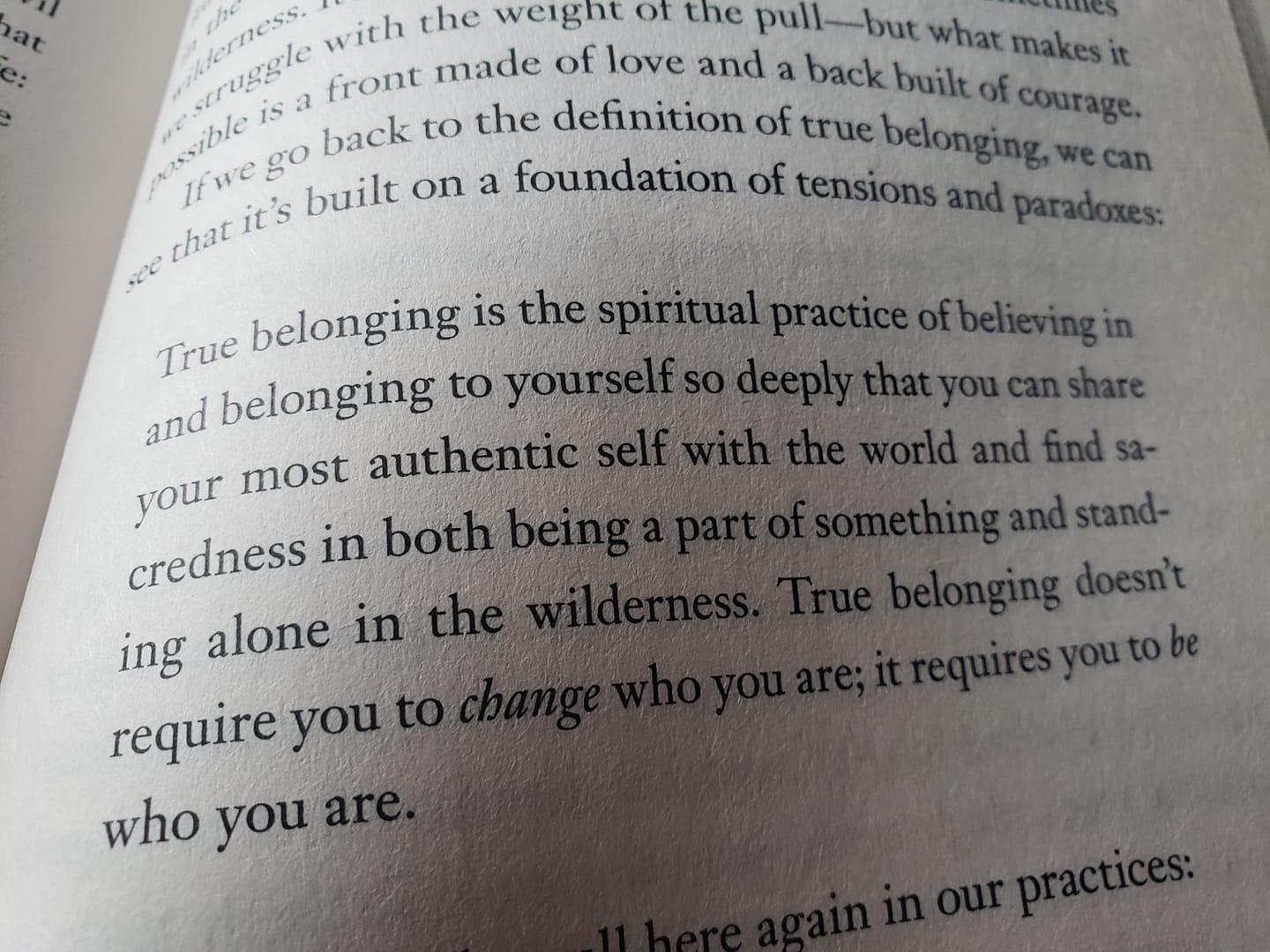
I recently have found myself working with several clients who are struggling with perfectionism and how that affects their lives. So many of us struggle with perfectionism, stemming in part from our childhoods and our need to be loved. What happens when we come to the understanding that we do not have to be perfect in order to be worthy of love and belonging? What happens when we let go of our need to be perfect?

Perfectionism often is borne of shame and so often is something we engage in because we feel we have to be perfect in order to be worthy. How has perfectionism manifested in your life? Do you tend to go above and beyond the call of duty to prove you are worthy at work or in your relationships? Do you bend over backwards for other people for fear that if you do not you will not be liked or loved?

Many people who struggle with perfectionism often find themselves also struggling with depression and anxiety, as well as a constant feeling of being disappointed or let down. It is good to remember that nothing in life is perfect. We as human beings are perfectly imperfect yet still worthy of love and belonging.

How is perfectionism playing a role in your life? Is it holding you back from engaging in activities because you feel you have to be perfect in order to enjoy them? Do you procrastinate on projects because you feel that something has to be done perfectly? TED Ed recently issued this report and quiz on perfectionism … https://ideas.ted.com/quiz-is-your-inner-perfectionist-running-your-life/ .

I encourage you to take a look at this article and quiz to see if you find yourself in it. Many of us engage in perfectionism but if we stop to think about how perfectionism is affecting our lives it can be easier to come to the understanding that we do not have to be perfect. Perfection is unattainable. Perfection is boring. You may find that if you constantly strive for perfection, you often will find yourself feeling disappointed.

I am not saying that we should strive for mediocrity. It is good to strive to do your best, at work, at home and in your relationships. It is good to do the best you can with what you have right now. That does not mean you have to be perfect. Remember that doing your best is all anyone can ask for, even you.

You can begin to let go of perfectionism by offering yourself grace and compassion for being the perfectly imperfect human that you are. We were not created to be perfect and it is good to remember that despite our flaws, we are worthy of love and belonging. You do not have to be perfect to be loved. You are loved because you are imperfect. You are loved because you are human.

What steps can you take to let go of perfectionism? Can you try to remind yourself that you are worthy of love and belonging simply because you are human?

We all are perfectly imperfect

Love is all around us

Today marks Valentine’s Day and for some the day can be quite challenging, leaving some feeling alone and lonely. Some people feel as though they are without love, but in fact love is all around us.

Sometimes, people feel Valentine’s Day is really only for those in partnered relationships. But this day can be a day to celebrate all kinds of love, including self-love. We can choose to celebrate familial love today or friendships or marital love. We can choose today to celebrate love in all its many forms. We do not have to be in a relationship to celebrate love today.

For some, it can be difficult to recognize love. We may long to hear those three words: “I love you” but one does not have to say “I love you” in order to show love. Love can be heard in “drive safe,” “be careful,” “text me when you get home.” Love can be felt in a touch. Love can be heard in a phone call checking in on you. Love can be seen in the wink of an eye. Love is all around you if you are looking for it.

There are so many opportunities for us to recognize love today. Perhaps there is something getting in the way of your noticing the love in your life. Perhaps you have been scorned. Perhaps you have been hurt. For those who have been, it may be difficult to recognize or even accept love. What steps might you be able to take to notice the love in your life?

Valentine’s Day does not have to mean cards, flowers or candy. It can mean phone calls, texts or video chats. It can mean you taking care of yourself in a loving fashion. I understand that not everyone has a romantic valentine today but that does not mean you cannot be your own valentine. What might you be able to do today to show yourself some love?

There are so many different kinds of love. Valentine’s Day does not have to solely be a day to celebrate romantic love. Perhaps there is someone you love in a platonic fashion you could reach out today to show love. Perhaps there is a family member you could show love to. Perhaps there is a friend you could connect with. Love is all around you if you look for it. Happy Valentine’s Day.

Love is all around us

Loving yourself as you age

With any luck, I truly am in the middle of my life. Yet as I find myself nearing 53 years old, I find myself struggling to accept aging—how aging is affecting me and what aging means for me. I find myself struggling with the fact that it is harder to do things that once came with relative ease, like running longer distances and maintaining my fitness to the degree I enjoy. I often find it challenging to appreciate my aging body for what it remains capable of as I notice changes in my appearance. It seems harder on most days to love myself as I am becoming a woman of middle age.

How do we appreciate our bodies as we age? How can I come to terms with what I am seeing and feeling? I often find myself telling clients who struggle with body image and aging to try to appreciate all their bodies allow them to do. I try to remember to be grateful for the fact that my two legs can still run from time to time, they still carry me to and fro. I try to remember to be grateful for my two hands that let me be expressive. I try to remember to be thankful for my eyes that continue to allow me to see all the beauty in the world. I try to remember to be thankful for my heart, my lungs and all my internal organs that likely suffered some measure of damage after having lived most of my life with anorexia nervosa. Sometimes I remind myself that it is a miracle I still am alive considering how I have treated my body over the years.

Some days, I have more success reminding myself that this aging body of mine still is capable of amazing things. I still am able to exercise two to four hours a day, which I understand could be considered excessive by many people. Other days, I find myself beating myself up for not feeling up to monster workouts or running. I find myself missing the younger version of myself who could run 40 to 50 miles a week after participating in an hour-long boxing class. It’s hard in my head. Sometimes, I feel like it’s hard being me. Likely some of you feel the same way.

On days when I feel as though it’s hard being me, I try to remind myself that none of my days are promised to me. I try to remember to be grateful for what I can do rather than lamenting what seems so difficult some days. No one is guaranteed longevity or health. None of us is promised tomorrow. The trick is to appreciate you as you are and what you still can do. Some days you may have more success with this, and that’s okay. I’m trying to be kind and gentle with myself as I age. I’m trying to practice more self-love than self-hate. I’m trying to love the woman I am becoming.

~ Karri Christiansen, MSW, LSW, CADC, CCTP

Loving yourself as you age

Tired, but hopeful

I have found myself feeling so tired of late, emotionally, mentally and physically. I suspect I am not alone in this feeling. I suspect I am not the only person feeling a deep, down exhaustion stemming not just from the pandemic but from the overall state of the world.

I started feeling this way a while back and recently on my drive to work a quote from the movie “Green Mile” popped into my head. The quote resonated with me as I pondered all the ugliness in the world today.

I have been thinking about this quote for several days now and noticing how all the ugly seems to be taking a toll on me. I find myself seeing ever more negativity on social media and in the news. Yet as I sipped my morning coffee as the sun rose so beautifully today, I am reminded that there is good and beauty and positivity all around me. So while I see so much ugly in the world, I find myself feeling sanguine that there still is beauty.

I also am reminded of dialectics, that is feeling two things at the same time. So when I find myself feeling emotionally, mentally and physically exhausted, I also am feeling inspired and hopeful.

I am tired of all the ugly in the world yet I recognize that I am surrounded by beauty.

I am tired of seeing negative, hateful things on social media yet am reminded how social media has allowed me to stay connected with friends and family near and far.

I am tired in my 52 year old body yet can practice being grateful for all it continues to allow me to accomplish.

I am tired of being in the midst of the COVID-19 pandemic yet am thankful for the scientists who have found ways for us to combat it as best as we can as the virus continues to mutate.

I am tired of not being able to be with my friends in person as much as I desire yet am thankful for the opportunity to find new and creative ways to keep in touch with them.

It can be challenging during these times of what seems a constant barrage of negativity to find the good in the world, yet it is there. Every day may not be good but there is good in every day, sometimes we just have to look a little harder to find it. Perhaps if we (including me) practiced gratitude more frequently, we would find ourselves feeling more joyful for it is grateful people who are happy. I know that as I continue to battle this feeling of tiredness, it may take more effort to turn things around for myself, it will be well worth the effort. What steps might you take to combat your own feelings of tiredness? Can you practice gratitude? Can you give yourself permission to find beauty and joy?

~ Karri Christiansen, MSW, LSW, CADC, CCTP

Tired, but hopeful

What did 2021 teach you about you?

It seems another year is coming to a close. I suspect many of us are wondering where 2021 went. I suspect many of us are wondering how the year went so fast. I suspect many of us have been left wondering if the new year to come will be any better than the last, considering we still find ourselves in the midst of a raging pandemic that has left more than one million people dead.

For many people, 2021 was not much better than 2020. For some, the opposite may be true. As this year comes to a close, I challenge you to think about what this past year has taught you about yourself. When you give this some thought, perhaps you will come to realize that you are stronger than you thought you are, more resilient than you imagined. The first two years of this decade have been, to say the least, very challenging. What have you learned about yourself through this pandemic that has left so many of us feeling burned out?

While you consider what you have learned about yourself in 2021, I urge you also to consider how you what you want to do with the new year. What would you like to look, sound and feel like in the new year? One of my clients had the brilliant idea of assigning each new year a word by which to live. As her golden birthday will be celebrated in 2022, she has assigned the year the word “glow.” Every day, she will try to live by that word. What could your word be? How do you want to live the upcoming year? How do you want to spend your days?

I have been giving this considerable thought and I have decided to make my word “fearless.” I hope to challenge myself to tackle things that make me feel less fearful as I age. I hope to make 2022 a year in which I do something brave as often as possible.

We can choose to let the upcoming year run us or we can run the year. How do you want to spend the new year? What do you want to do with your time? I think the COVID-19 pandemic has taught many of us that time is fleeting. We are not guaranteed tomorrow; we only have today. How can you best spend your time? What word do you want to assign to this new year? Consider what that could be and try to live up to it.

What did 2021 teach you about you?

Grief shows us that we cared and loved deeply

Death is a natural part of life. We all know this yet somehow that does not make it easier when we lose a loved one. The death of a loved one can leave us with profound feelings of grief as we mourn. How do we get through this?

I find myself dealing with much death lately. Several of my clients have experienced the loss of loved ones in recent weeks, as have several of my friends. I myself still am in grief as I continue to mourn my mother who died two days before Christmas in 2012. I am reminded that we do not move on from grief, we move through it.

Many of us are familiar with Elizabeth Kubler-Ross’s stages of grief: denial, anger, bargaining, depression and acceptance. It is important to remember that we do not necessarily move through these stages in a linear fashion. We may move back and forth through the stages, lingering in one or more at any given time. We may feel both depression and anger when a loved one dies. We may find ourselves in denial while bargaining. Know that whatever you are feeling when grieving a loved one is okay. Your feelings surrounding your loss are fair and valid. No one has the right to tell you to move on. You grieve in your own way and in your own time.

David Kessler, an expert on grief, now speaks of a sixth stage that some of us may experience after a loss and that is meaning making. It may take months or years to make sense of a loss but you may find yourself able to do so. He offers a TEDTalk about this and you can find it here: https://www.ted.com/talks/david_kessler_how_to_find_meaning_after_loss.

We all at some point will lose someone we care for or love. We all at some point will experience the deep pain of grief. However you find yourself grieving is fair and valid. You may find yourself flooded with memories of your loved one. You may find yourself crying for days, weeks or months after your loss. That is okay. You grieve in your own time and in your own way. You may find yourself reminded of your loved one’s passing as their death date nears or at birthdays or anniversaries, and that, too, is okay. You may find yourself in mourning for months or years. It is okay to ask for support in whatever way you need to be supported through grief from whomever you need it from.

When we find ourselves in grief, it may be helpful to remember that we feel this way because we cared for or loved that person deeply. We chose to love that person. Grief reminds us that we cared for our loved one with our hearts. Grief reminds us that we are capable of deep love.

The death of a loved one never is easy to navigate, even if that death is expected. Whatever you are feeling, whatever stage of grief you find yourself in, is okay. Remind yourself that it may take months if not years to process your loss. Remind yourself that your feelings are fair and valid. And remind yourself that it is okay to reach out for support if you need to.

Grief shows us that we cared and loved deeply

Celebrating a day to give thanks

Today marks Thanksgiving in the United States. The day for many means gathering with friends or family or both to celebrate all for which we are grateful. And in the United States, we have so much for which to be grateful. How will you give thanks today? How will you practice gratitude today?

Today can bring for many a mix of emotions. Many of us will find ourselves feeling excited to be able to spend time with those we love and care for. Yet, some may be dreading the holiday as it can bring feelings of sadness as we remember those we have lost. Try to remember that it may feel good to give thanks for the memories you have of your lost loved one.

For those struggling with eating disorders, the day can bring on feelings of food anxiety. For those who are feeling anxious about food, it may be helpful to remember and give thanks for wherever you may be in your recovery.

It may also be helpful to remember that it is okay to give thanks even for those relatives we find challenging because of their political beliefs or leanings or because of other reasons. We all have at least one relative with whom we disagree. Try to remember that it is okay to give thanks for the ability to try to see both sides in any argument. Try to remember that it is okay to give thanks for the thought that we all are entitled to our own opinions.

Thanksgiving can be a time to practice gratitude for all we have in our lives, for love, for friendship, for family, for our jobs if we have one, for the ability to laugh. How will you practice gratitude today? For some it may be a challenge to figure out how to practice gratitude during this season. Here are some thoughts on doing so … https://ideas.ted.com/your-5-day-gratitude-challenge-from-ted/.

On some days, it may be challenging to find something for which to be grateful. Try to remember that you do not have to practice gratitude for just the big things in life; you can practice gratitude for even the smallest thing. Maybe you made bunch of green lights today on your way to Thanksgiving dinner. Maybe you started the day with a really good cup of coffee. Be thankful for that, and for the people who grew your coffee so that you could enjoy that. Maybe your hair turned out really good today. Maybe you heard from a friend you hadn’t heard from for a while. Be thankful for that.

There are so many things for which we can be thankful. How will you give thanks today? How can you practice gratitude? However you go about doing so, I wish you a day full of love and laughter.

Celebrating a day to give thanks

How to navigate holiday stress

It seems the holiday season is upon us. For many people, this can be a time to celebrate with family and friends and to remember those who may no longer be with us. For many people, this time can be one of nearly unbearable stress.

The holiday season can be one of great importance to many people. We may find ourselves trying to get together with those we love, with our friends and families, with those we have not seen in a while because of the COVID-19 pandemic. We may find ourselves running from here to there and everywhere in between. We may find ourselves attending gatherings or hosting gatherings. All of this may lead to feelings of stress, anxiety and overwhelm. It always is important to remember to take time during this busy season to take care of ourselves, to take time to practice self-care and to rest when we need to.

It also may behoove you to remember that it is perfectly acceptable to say “No” to those things that no longer bring you joy. If you are feeling overwhelmed by all the holiday get-togethers, it is okay to decline an invitation and send your regards. If you find yourself feeling stressed out because you have 35 people coming over for Thanksgiving, it is acceptable to ask those guests to contribute a dish to the meal. You do not have to do everything for everyone all the time. It is okay for you to ask for help if you are feeling stressed, anxious or overwhelmed.

The holiday season can be a joyous time for many people while for others it can lead to feelings of anxiety. It always is good to practice self-care but perhaps even more important during this season. I have had several clients recently ask me what self-care is, what that term means. Practicing self-care means doing things for you that bring you pleasure and joy. Perhaps it means making time to read a favorite book or watch a holiday movie. Perhaps it means scheduling a massage, manicure or pedicure. Perhaps it means going for a walk or run or bike ride. Self-care can be anything that feels good to you that helps you manage feelings of stress, anxiety or overwhelm. What can you do during this holiday season to make yourself feel good? What can you do to take care of your own needs. You cannot pour from an empty cup. Remember that it is okay to take care of yourself so that you can better take care of those you love.

Managing stress and anxiety during the holiday season can mean for some remembering that nothing needs to be perfect. When we strive for perfection, we can feel constantly let down and disappointed with ourselves, with a situation. Remember that it is okay to accept that you have done your best; that is always good enough. No one can ask for more than your best. It always is good to remember that you are doing the best you can with what you have right now. It always is good to remember that you are worthy of love and belonging simply because you are human, not because your Christmas tree is decorated perfectly.

With the holiday season now upon us, remember that it is okay to say “No” to the things that no longer bring you joy. The holiday season can be a stressful time for many people. Remember that it is acceptable to decline invitations, to cut back on your cooking or baking and ask for help. Doing things to manage your stress, anxiety and overwhelm can mean a more joyous holiday season not just for you but for those you love.

~ Karri Christiansen, MSW, LSW, CADC, CCTP

How to navigate holiday stress

You are not alone in feeling lonely

We are in the midst of an epidemic of loneliness. Nearly three of five people experience deep feelings of being lonely and for many, these feelings are worsening because of the COVID-19 pandemic. Loneliness is strongly correlated to feelings of depression and anxiety. The question is, what to do about it?

Many of us feel lonely from time to time but since the start of the COVID-19 pandemic, more of us are experiencing feelings of loneliness, as well as an increase in depression and anxiety. Loneliness is more than feeling alone. Many of us enjoy our alone time and many of us need alone time now and again. Loneliness, though, can leave us feeling as though we are an island unto ourselves, without friends or loved ones.

Sometimes when we’re feeling lonely, we may find ourselves longing for a particular person or group of people. What, if anything, is making it challenging for you to reach out when feeling this way? For some, there is a fear of rejection: What if I reach out and am turned down for company? Others may feel that reaching out makes them look weak. Still others may feel as though they may be a burden if they reach out and ask for company. It is astonishing to me how many of us fail to reach out because the feeling of being rejected or being a burden is heavier than that deep feeling of loneliness. What if the opposite is true, though? What if you were to reach out only to find that your friend or loved one is feeling similarly?

Another reason we may fail to reach out when we are feeling lonely is because, on some level, we have convinced ourselves that we are not liked or loved, even by our closest confidantes. Many of us engage in this kind of thinking from time to time, often when our self-esteem is lagging. Perhaps we should test the veracity of that thought, though. More likely that not, we do have friends or family we can reach out to when we are feeling lonely and more likely than not we are loved for who we are. Perhaps your friend or family member also is feeling lonely. Perhaps you are not the only one in need of companionship.

Many of us have found since the beginning of the COVID-19 pandemic that we feel increasingly isolated. We find ourselves not sure to whom we can reach out or how to reach out. I think the pandemic has taught many of us new and creative ways to connect with our people. We can reach out by phone, text, email, video chat or in person if we feel comfortable doing so. What is preventing you from connecting with your people? Is there a story you keep telling yourself that keeps you from reaching out? Is it possible that your people may be longing for connection just as much as you? Is reaching out the antidote to loneliness? What is stopping you from reaching out? Is it you?

~ Karri Christiansen, MSW, LSW, CADC, CCTP

You are not alone in feeling lonely

Self-love is not borne of shame

We talk a lot about self-love these days but one thing we sometimes forget to speak of is how to get there. We know that self-love is not selfish; it is necessary so that we can become happy, healthy individuals. But how do we move from perhaps disliking ourselves to coming to love who we are while becoming who we want to be? The first step is to pay attention to how we talk to ourselves.

So many of us engage in negative self-talk, saying sometimes downright cruel things to ourselves. How many of us walk around calling ourselves derogatory names like “idiot,” “loser” or “dumbass?” I suspect many of us engage in this sort of self-shaming talk without even realizing it. I wonder what would happen if instead of calling ourselves nasty names, we instead referred to ourselves in loving terms, using words like “darling,” “love” or “sweetheart?” I wonder this because it matters how we speak to ourselves. We cannot shame ourselves into self-love. We cannot speak badly to ourselves and expect our brains and bodies to respond positively.

Instead of engaging in negative self-talk, try countering those statements with positive affirmations. Focus on those parts and qualities of you that you like and voice them aloud. For example, instead of calling yourself ugly, compliment yourself aloud on your beautiful eyes, your winsome smile, your lovely hands. Instead of calling yourself stupid, remind yourself that you have skills others may not possess. Instead of berating yourself for making a mistake, remind yourself that you are doing the best you can with what you have right now. You are listening to the way you speak to yourself so try to speak kindly to yourself, just as you might speak to a friend or other loved one. More likely than not you would not say cruel things to a loved one, so why speak that way to yourself?

It takes practice to move away from negative self-talk and self-shaming but I guarantee the more you practice positive self-affirmations and positive self-talk, the closer you will come to self-love. It may seems strange or silly at first to speak kindly to yourself but I suspect that with practice, you will notice a marked shift in the way you not just perceive yourself but in the way you feel about yourself. You might notice that you stand a little taller, walk with more confidence and speak with more authority after practicing positive self-affirmations for a few weeks. The more we engage in positive self-talk the better we will start to feel about ourselves and the more we will come to love ourselves for the perfectly imperfect beings that we are. We all have positive qualities we can focus on; what are yours? Think for a moment about three things you like about yourself and voice them aloud. Perhaps your three things are that you are kind, caring and compassionate. Voice those things aloud in “I am … ” statements. Remind yourself that there is more good about you than bad and then focus on those good qualities. Remember that the way you speak to yourself matters and that you cannot shame yourself into self-love.

What three positive things about yourself might you be able to focus on today? Can you voice those things? Can you counter your negative self-talk with positive self-affirmations? The more you do so, the better you will feel about yourself. Why not give it a try? Why not give yourself a chance to feel good about yourself?

~ Karri Christiansen, MSW, LSW, CADC, CCTP

Self-love is not borne of shame